
Why “giving people power” often backfires, and what agency-centred practice offers instead

The word empowerment is everywhere.
We talk about empowering young people, empowering communities, empowering staff, empowering “the vulnerable.” Empower everyone.
But if we look closely, empowerment often carries an unintended message:
that we hold all the power,
and they have none until we decide to hand it over.
(That’s not empowerment – that’s charity dressed up as strategy.)
In trying to solve the power imbalance, we quietly reinforce it.
I’ve always found that contradictory.
And I’m not alone – many thinkers across psychology, community development and social change have been naming this tension for years.
So what if true empowerment isn’t something given from the outside in –
but something grown, awakened, and strengthened from the inside out?
🌿 What Agency Really Means

Psychologist Albert Bandura described agency as the human capacity to influence our circumstances – to be, as he said:
“producers of our life circumstances and not just the products of them.”
Agency is the inner sense of control that helps us make choices, shape environments, and stay steady yet flexible in times of change.
It’s what allows a young person to say,
“I can do something about this.”
It’s what helps a practitioner realise,
“We can respond creatively – not just follow a script.”
It’s what allows a community to move from being served to being self-directed.
And it’s the spark that makes people stand together in solidarity against injustice – the moral clarity that drives collective action.
Agency is universal – but not equally accessible

This is where intersectionality matters.
People’s ability to exercise agency is shaped by overlapping identities –
race, gender, class, culture, disability, sexuality, migration history, neurodiversity, and place.
For many young people and communities, especially those carrying multiple layers of marginalisation, the barriers are not internal but systemic.
An agency-centred approach doesn’t flatten these differences –
it recognises them, honours them, and designs with them in mind.
🌿 From Power Over to Power With

If we keep using the language of empowerment without rethinking power, we risk reinforcing the very dynamics we hope to shift.
Power is often imagined as something scarce – held by institutions or professionals.
But in practice, power multiplies. It grows through connection, coherence relationship and mutuality. We see this in communities all the time. It’s people power – like the young people in Lithgow acting in concert, generating energy that none of them could have created alone.
In relational, participatory and strengths-based practice – whether through ABCD, appreciative inquiry, place-based approaches, collective impact or co-design, agency doesn’t come from a professional “empowering” someone.
Agency grows in relationship, through trust, reciprocity and shared action. As social capital strengthens each person, the whole becomes stronger than the sum of its members.
Networks don’t grow in straight lines; they grow exponentially.
Not power over.
Not even power for.
But power with – and eventually, power by.
And there is nothing more powerful than a group of people coming together with a shared goal, acting with collective intention.

This means:
- involving people from the very beginning, not after decisions are made
- creating spaces where young people and communities don’t just participate, but shape the agenda
- prioritising safety, trust, and “brave spaces,” not bureaucratic boxes
- practitioners knowing how to step back, hold space, and advocate for environments where agency can flourish
It also means facing a truth we quietly know: We’re not neutral instruments delivering a method. We are part of the relational field – shaped by our stories, identities, wounds, gifts and power. We hold influence whether we acknowledge it or not. And with that comes a different kind of authority: the courage to stand for what’s right, and the humility to step back and host the space so the community’s own wisdom can rise. Hosting is the practice of creating the relational conditions where people’s own power can surface and move.

🌿 Agency in Practice
Across councils, communities, and regional networks, I’ve seen agency thrive when five conditions are present:
1. Voice is Valued
Lived experience is treated as expertise.
Meetings become community conversations, not consultations.
2. Relationships Are Reciprocal
Practitioners listen as much as they lead.
Young people teach as much as they learn.
3. Action Follows Reflection
Ideas don’t stay in the room.
They turn into prototypes, pilots, projects, and visible change.
4. Decisions Are Transparent
Young people and communities are not “consulted” –
they are part of the actual decision-making process.
5. Co-Production Follows Co-Design
The work becomes youth-led and community-led wherever possible –
not out of ideology, but because it is more truthful, more effective, and more sustainable.
Whether it’s young people in Lithgow reimagining their town, a regional council experimenting with participatory methods, or a group long denied a voice finally finding the space to speak and lead –
the shift happens when people experience themselves as capable actors, not recipients of help.
This challenges every limiting narrative of “disadvantage.”
And yes – sometimes disadvantaged simply means taken advantage of by systems designed around deficit, dependency, and top-down service delivery.
🌿 Reclaiming Our Own Agency (as Practitioners)

There’s another layer to this conversation.
Practitioners – especially those working in complex systems with shrinking budgets, rising expectations, and competing pressures – often lose their own spontaneity and sense of agency.
We follow templates.
We meet KPIs.
We navigate conflicting agendas.
We adapt to bureaucracies instead of to people.
And we forget that we, too, are producers of circumstances – not merely responders to them.
Yet it’s our spontaneity, creativity, presence, and responsiveness that make this work alive.
Agency is contagious.
When we act with agency, we create conditions for others to reclaim theirs.
And no – you don’t always need to ask for permission.
Sometimes the most ethical leadership is modelling what’s possible – working in the gaps and, as we often say in ABCD, doing what you can, where you are, with what you have – and trusting that this is enough.
🌿 Towards Agency-Centred Practice
Maybe it’s time to move beyond empowerment programs and toward agency-centred practice –
where the aim isn’t to hand people power but to build environments where they can exercise the power they already have.
In that sense, agency is both personal and collective –
the pulse of possibility that runs through our relationships, our communities, and every moment of shared creativity.
And maybe the real question isn’t:
“How can we empower people?”
But rather:
“How do we start trusting people’s capacity to act?”
✨ Author
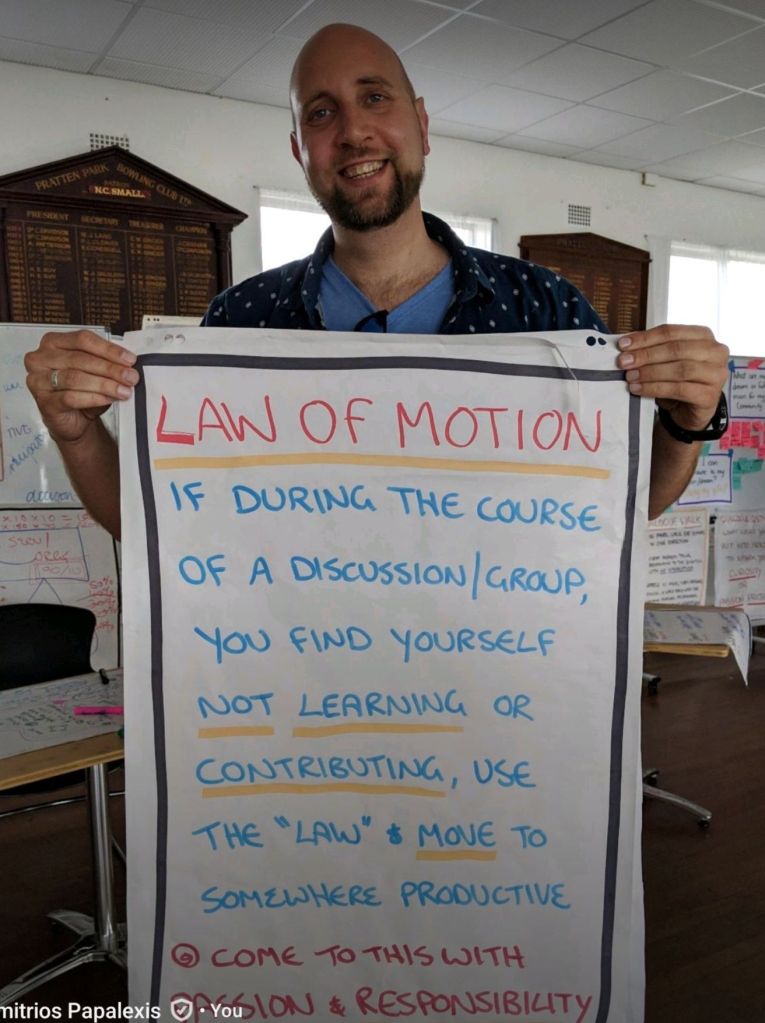
Dimitrios Papalexis, founder of Soulgen, works at the intersection of community development, psychodrama, and strengths-based practice. His work supports councils, organisations, and networks to build participatory, relational, and place-conscious cultures of collaboration.
http://www.soul-gen.com.au
 Soulgen
Leave a comment