
Across councils, youth services, libraries, neighbourhood centres and community organisations, one aspiration is repeated again and again:
“We want meaningful youth participation. We want community engagement, we want empowerment. We want youth-led practice.”
But in the rush to “empower” young people, our sector often relies on approaches that are important yet incomplete: Rights-Based, Participation-Based, and Empowerment-Based frameworks. Each holds value.
None on their own guarantee community-led, place-based, strengths-driven change.

This is where Asset-Based Community Development (ABCD) offers something different.
Something deeply relational.
Something that creates collective power – what Hannah Arendt called acting in concert.
⭐ Rights-Based Approach
“Young people have rights. Systems must uphold them.”
The rights-based approach, grounded in international human rights standards, focuses on:
- dignity
- safety
- non-discrimination
- voice
- equitable access
It ensures young people are respected not because we allow it, but because they are inherently entitled. It is essential – but rights can feel abstract unless embodied relationally.
⭐ Youth Participation
“We must include young people in decision-making.”
Participation strengthens:
- democratic values
- youth voice
- shared decision-making
- consultation processes
But too often, participation stops at:
- advisory groups
- focus groups
- surveys
Young people speak, adults decide.
This creates involvement, not ownership.
⭐ Youth Empowerment
“Build their skills and capacities.”
This approach helps young people develop:
- confidence
- capability
- autonomy
- leadership
- resilience
Important – but sometimes overly individualistic.
Young people gain tools, but not always influence.
⭐ ABCD – “Start with what’s strong, not what’s wrong”
A relational approach that weaves all the others together.
ABCD begins with strengths:
- gifts
- skills
- local leaders
- cultural assets
- relationships
- community networks
- places and stories
It recognises young people not as service recipients – but as co-creators of community life.
ABCD brings together what each framework does well:
Integrates all three approaches into practice
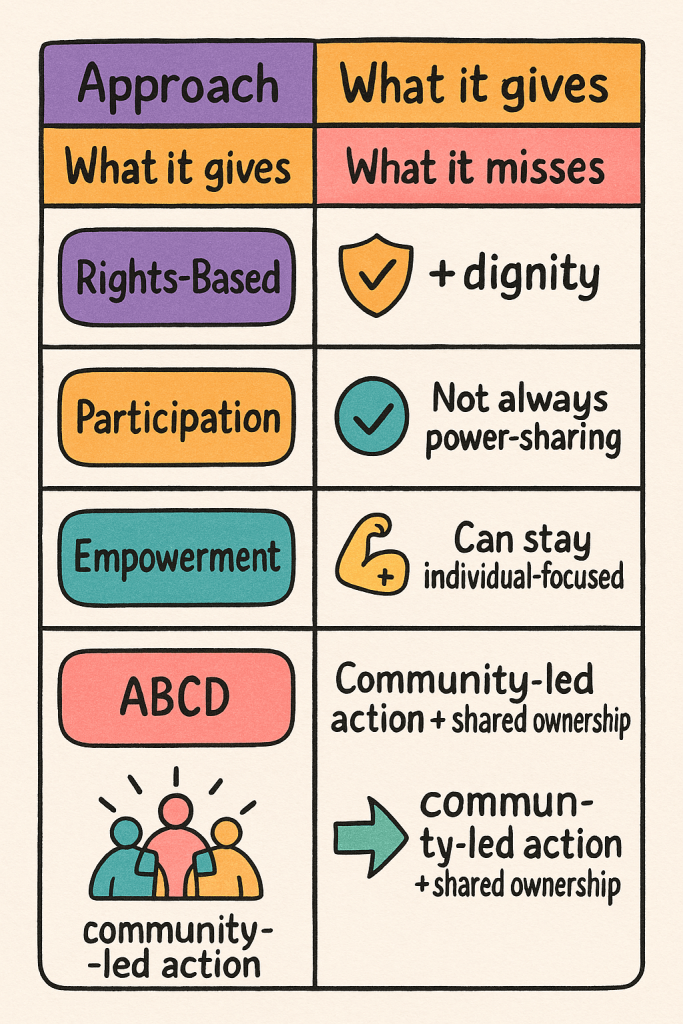
ABCD is where rights, participation, and empowerment become embodied, relational, and collectively owned.
🌱 A Story From Practice
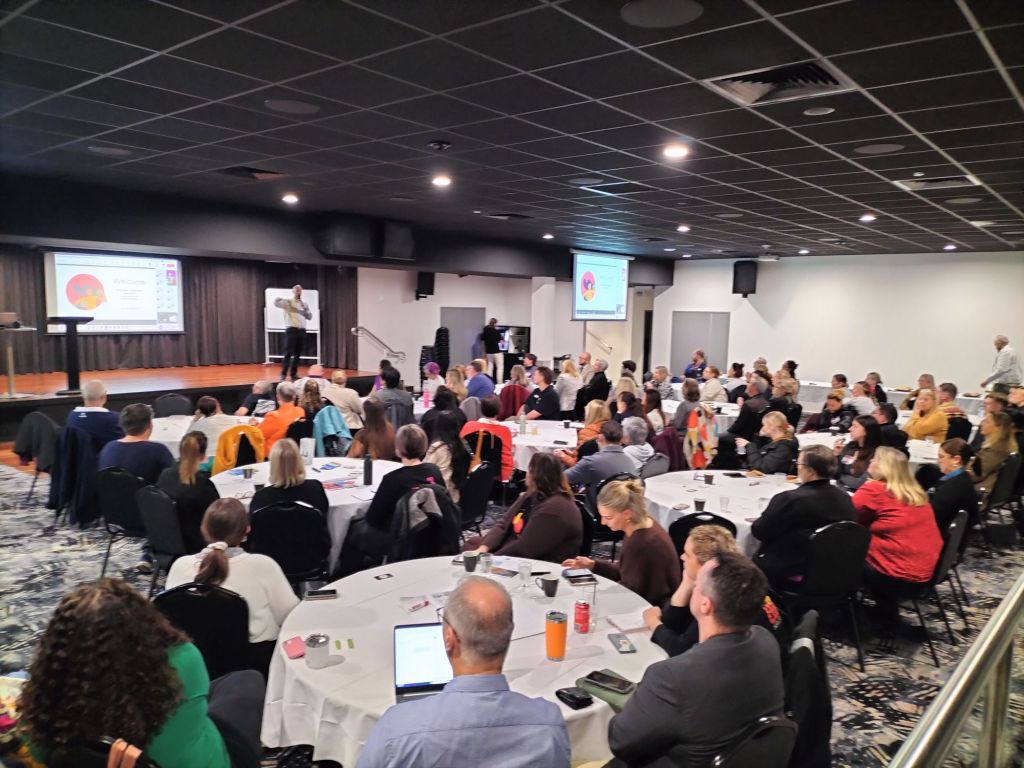
How ABCD transformed youth engagement in Lithgow
During the Young Changemakers program and later at the Youth Summit supported by partners like the Western Sydney University Lithgow Transformation Hub, around 40 young people explored local wellbeing data from Planet Youth.
But instead of analysing statistics, they turned the data into:
- poetry
- symbolic objects
- designs
- story-based exploration
- youth-led solutions
One poem started with:
“Lithgow can be boring…”
and ended with:
“You can make many more choices by listening to all our voices.”
This is ABCD in action.
Young people reimagining place – not through consultation, but through co-creation and acting in concert!
They weren’t just engaging with data.
They were shaping the story of the town.
⭐ Why ABCD Works So Well With Young People
Across initiatives in places like Villawood, Cooks River, and regional communities across NSW, ABCD has enabled young people to:
- design youth cafés
- co-create summits and events
- lead art, culture, and placemaking projects
- build social cohesion initiatives
- map local assets
- lead co-design work
- strengthen belonging
ABCD brings young people into the centre – not as “engagement targets,” but as partners in shaping place.
They move from being consulted…
to collaborating…
to acting in concert.
⭐ What This Means for Councils and Organisations
If your team wants to improve:
- youth participation
- community engagement
- cross-sector collaboration
- social cohesion
- strengths-based practice
- place-conscious work
…ABCD provides a practical, relational pathway.
It:
- builds staff confidence
- strengthens internal collaboration
- improves project design
- aligns strategies with community assets
- creates more sustainable outcomes
- generates community ownershipshifts the culture from “doing for” to working with
In short: ABCD helps communities lead.
And when communities lead, young people thrive.
🌏 Bringing It All Together
Rights-based approaches protect dignity.
Participation elevates youth voice.
Empowerment builds skills.
But ABCD weaves these together into a living ecosystem – where young people, councils, families, communities, and local partners create change from the inside out.
ABCD turns:
- deficits into design
- problems into purpose
- services into relationships
- engagement into partnership
- scattered efforts into acting in concert
It’s where youth work becomes community work.
And where communities rediscover their collective strength.
💬 Want to Explore ABCD for Your Team or Council?
If your organisation is looking to:
- deepen youth participation
- strengthen place-based work
- activate community leadership
- embed strengths-based practice
- build collaborative ecosystems
Soulgen can tailor ABCD training or facilitation to your context.
Reach out anytime – I’d love to help your team build on what’s strong.
 Soulgen
Leave a comment