
Ripples from Bondi: What social cohesion is, what it isn’t – and what it will take now

I’m finding it hard to find the right words for what has unfolded over recent days.
Across Bondi, Sydney, and beyond, it has felt like a dark cloud has descended at the very end of the year – a time when many of us are usually slowing down, reconnecting, and restoring. Instead, I’m noticing something else in the social atmosphere: not just shock or grief, but a kind of collective holding of breath, alongside fear, anger, confusion, and numbness.
Many people are trying to make sense of something that doesn’t make sense.
And in moments like this, I keep returning to one simple but demanding truth:
Social cohesion isn’t a slogan or a box to tick. It’s something we have to keep tending to – especially when things are hard.
The gap I keep seeing
So often, the message in times like these is: reach out for support.
That matters. And it’s important.
But what we are living through right now is not only an individual mental health issue. It is a collective experience carrying trauma – and collective experiences require collective spaces and ways of being together.
Alongside my work in community development, youth participation, co-design, and social cohesion, I also support organisations and communities through critical incidents. From that vantage point, I’m seeing how this moment is landing very differently across communities.
I’ve supported people who have lost friends and loved ones and are carrying deep grief and shock.
I’ve also supported Jewish community members who are carrying fear, grief, anger, and a profound sense of dislocation – and Muslim community members who are also carrying grief and distress, while feeling afraid or unfairly judged for acts that violate their faith and values. Acts of violence carried out in the name of religion do not reflect the lives or beliefs of the vast majority of Muslim communities I work with.
Many young people, in particular, are struggling to make sense of fear, polarisation, and what kind of world they are inheriting.
Many people are also carrying deep distress about violence and suffering overseas – and when those feelings are not acknowledged in public discourse, they don’t disappear. They spill into local life.
This is exactly why we need spaces that can hold complexity without dehumanising one another.
When those shared spaces are missing, fear fills the vacuum. Simplification follows. And division hardens.
What social cohesion actually is (and what it isn’t)
Social cohesion is
A lived experience of belonging, trust, and participation – within and across difference.
It’s not just how calm things look on the surface. It’s whether people can stay in relationship when things are painful, confusing, or confronting. It’s whether disagreement can exist without turning into dehumanisation.
In practice, social cohesion looks like:
- People feeling they belong without having to erase parts of themselves
- Communities having ways to talk when things are hard – not just when they are easy
- Institutions behaving in ways that build civic trust, not just compliance
- The capacity to hold difference without immediately converting it into threat
- Spaces where fear can be named before it turns into blame
Social cohesion is not
Forced harmony.
It’s not everyone agreeing, calming down, or moving on prematurely. Real cohesion can include disagreement, protest, anger, grief, and strong views – as long as those realities can be held with dignity and without scapegoating.
It’s also not:
- A unity campaign that suppresses complexity
- Tokenistic multiculturalism
- A single-issue response dressed up as cohesion
- A set of attendance numbers without evidence of trust or relationship
- A political slogan used to manage optics rather than mend the social fabric
When compassion becomes fragmented

It feels important to say this clearly:
Antisemitism must be confronted directly and urgently. Safety, accountability, and strong responses matter. There is no justification for terror, hate, or calls for violence – ever.
Naming what follows does not reduce that urgency. It strengthens our ability to prevent further harm.
When grief is organised into hierarchies – when some pain is legitimised while other pain is treated as inconvenient, secondary, or too risky to hold – we don’t create safety.
We create fractures.
I am seeing Jewish grief.
I am also seeing Muslim fear.
I am seeing many people across the country struggling to make sense of rising division and a loss of safety.
I am seeing young people withdrawing, hardening, or feeling they must choose a side just to be allowed into the conversation.
This is what happens when collective experiences are treated as individual or siloed problems.
The missing layer: bodies, relationships, and meaning

Investigations, policy responses, security measures, and clinical supports all matter. They play essential roles.
But they do not meet every need created by moments like this.
In the days after violence, people don’t experience fear and grief as policy problems. They experience it in their bodies, in their relationships, and in their sense of safety.
A formal process may have its place, but it doesn’t necessarily:
- calm nervous systems
- restore trust
- help people make meaning
- support those quietly carrying hypervigilance and dread
- rebuild a sense of home
That work is relational.
It happens locally.
It happens through presence and through our shared response-ability: the capacity to notice, to stay with what is difficult, and to respond with care rather than collapse or blame.
This is why carefully held, shared community spaces matter – not as replacements for clinical or legal responses, but as complements. Spaces for co-regulation, meaning-making, and reconnection.
On radicalisation and collective blame
If safety is truly the goal, then we need to talk about radicalisation with precision.
Radicalisation is not reducible to religion, ethnicity, or community alone. It is a process that feeds on grievance, isolation, humiliation, trauma, and belonging deficits – and it can attach itself to ideologies, including religious extremism.
When individuals or organised groups promote or enact violence, they must be held accountable. That is essential.
But blaming entire communities is not justice – it is fear-driven generalisation.
And collective blame tends to deepen alienation, erode trust, and create the very conditions in which further radicalisation takes hold.
So what will it take now?
Based on what I’m seeing on the ground – not in theory, but in rooms with real people – a few things feel essential.
1. Stop narrowing compassion
Cohesion collapses when compassion becomes selective. Supporting Jewish communities and ensuring safety is urgent – and narrowing our capacity to hold the wider emotional field ultimately undermines prevention and healing.
2. Work from the middle
When people harden into opposing camps, the most generative work happens in the middle of the spectrum – with those who are still reachable, still human to one another, still capable of creating something new together.
3. Create shared spaces that are carefully held
Not public shaming arenas.
Not debates designed for winners and losers.
But contained, facilitated, culturally responsive spaces where people can name fear before it turns into blame, grieve without competing, listen without erasure, and reconnect without denying harm.
4. Co-design the response
The most ethical cohesion work is not imposed. It is built with community leaders, young people, and those living the reality – using skilled facilitation and methods that support safety, embodiment, dialogue, and collective meaning-making.
5. Measure what actually matters
Not just activity.
But belonging. Trust. Participation. Relationship. Safety without assimilation.
A final word
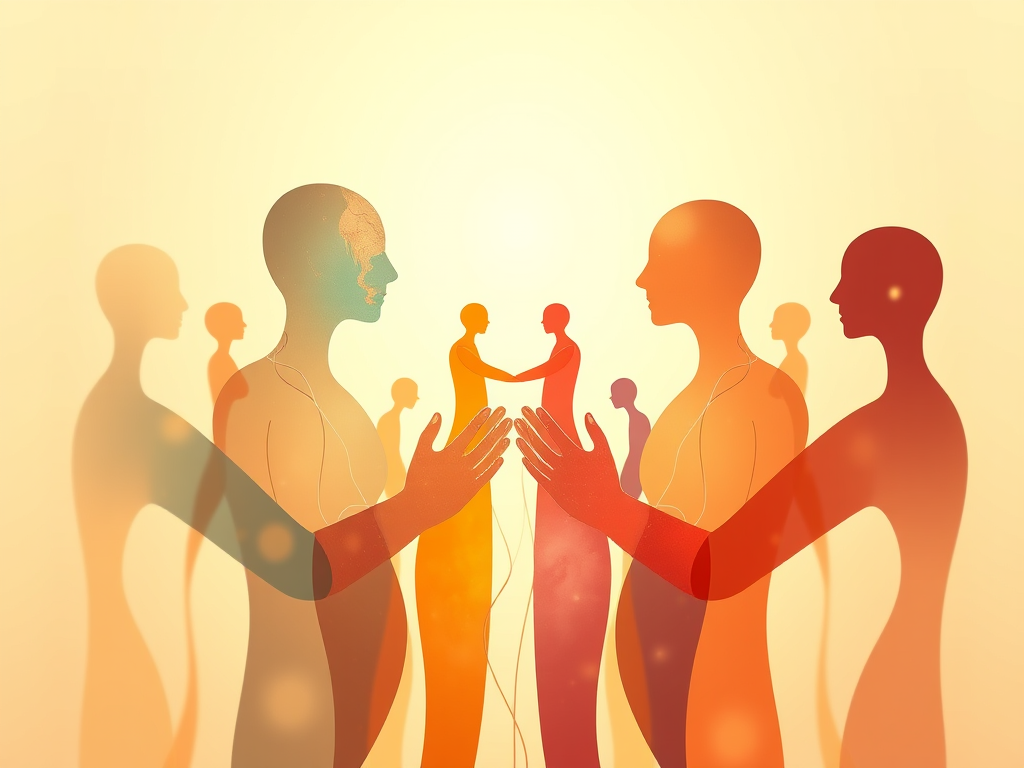
We don’t need to choose between accountability and care.
But we do need to be careful not to let process replace presence.
A Jewish Australian friend said something to me recently that I can’t shake: that Australia no longer feels like home for him. That level of fear and dislocation matters. It deserves to be held with care — not reduced to headlines or statistics.
And so does the fear carried by Muslim communities who feel collectively judged for acts that violate their faith and values.
If we can’t hold that complexity now, we should be honest about what kind of cohesion we’re actually trying to build.
Because social cohesion isn’t built by narrowing the frame until it feels manageable.
It’s built by having the courage to hold the whole – with compassion, with care, and with a commitment to our shared humanity.
Strength comes from inclusion, not exclusion.
From relationship, not silence.
From choosing – again and again – to stay human, and in relationship, together.
 Soulgen
Leave a comment