
Community, Intimacy, Kinship – and the Slow Work Beneath Change
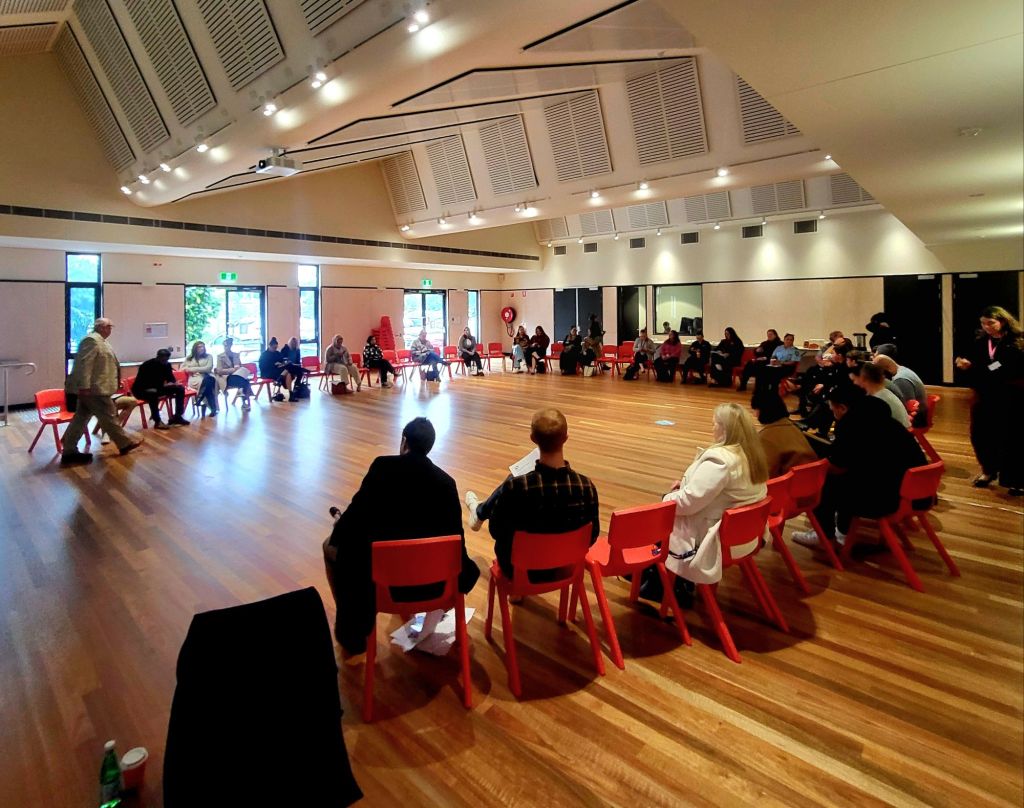
Lately, I’ve been sitting with something I know many of us feel but don’t always name openly.
At first, it felt like a tension. But the truth is, it’s more of a learning – one I’m still integrating and embodying more fully. Because learning isn’t linear. It’s circular and experiential. You can know something intellectually, but until you live it, feel it, and move through it again and again, it doesn’t really land in your body or your way of being.
This has been true for me with slowing down, intimacy, and kinship.
We work in a sector that values doing – speed, outcomes, impact, success stories. We’re encouraged to act quickly, fix problems, produce results, and often to decide for people rather than with them. In the name of good intentions and efficiency, we can easily prioritise looking effective over being truly effective.
And yes – there are moments that genuinely call for agile action.
Yet the deeper I go in my work – with organisations, diverse communities, young people, small groups, and even within myself – the more I notice how often meaningful change asks for something else entirely:
Slowing down.
In Asset-Based Community Development, there’s a phrase I keep coming back to: move at the speed of trust. I don’t know why it keeps returning, but it does.
Slowing down isn’t easy, and it’s rarely comfortable. But without trust, things may move quickly – and still go nowhere that lasts or sustains.
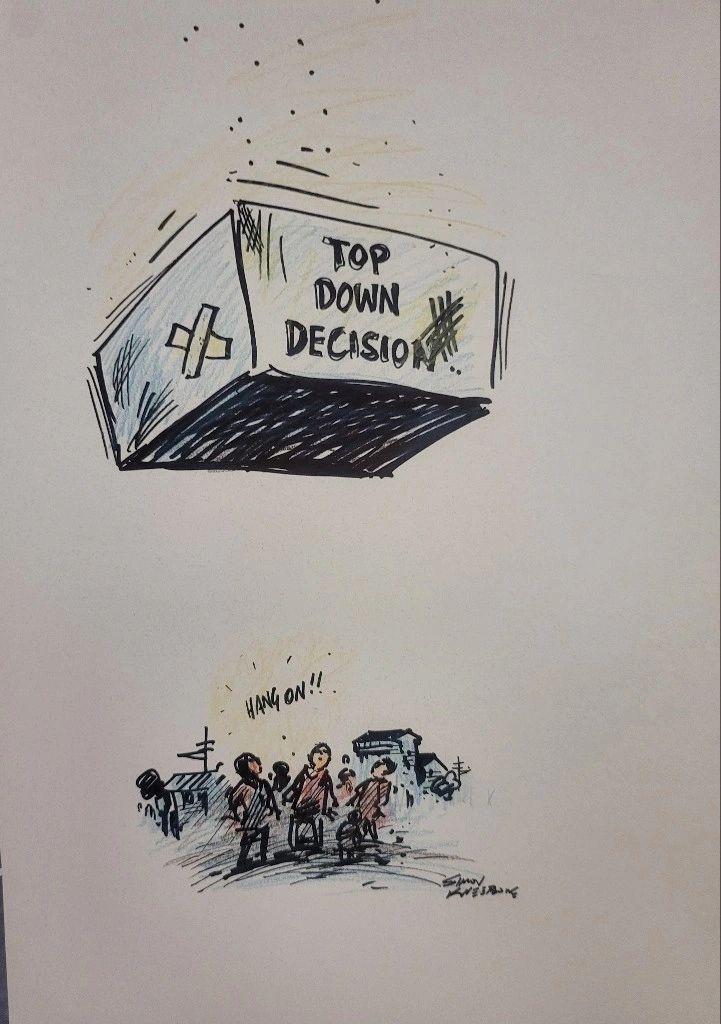
This isn’t a romantic idea. It’s a practical one.
Slowing down is not about withdrawing, doing less, or avoiding responsibility. It’s about recognising that speed shapes how we relate – to problems, to people, and to ourselves. And when we’re dealing with complexity, fracture, grief, trauma, and loss of trust, speed is rarely our friend.
Many of the challenges we face today are not technical problems waiting for efficient, linear, or purely intellectual solutions. They are deeply relational and interconnected. They live in the spaces between people – in broken trust, polarisation, loneliness, disconnection, environmental grief, racism, conflict, violence, and the uneasy questions raised by technology and AI.
These are not things we can rush our way through.
Slowing down, in this sense, is not the opposite of action. It’s a different quality of action – one that allows for emergence.
I was struck recently by reflections from the Post Growth Institute that named slowing down as essential to moving forward with intention and integrity – while also recognising that strong relationships allow us to respond quickly when it truly matters.
That landed something important for me.
Speed without relationship erodes trust.
Relationship gives both slowness and speed meaning – and intention.
Efficiency is often inward-looking.
Effectiveness is outward-looking.
(For those interested, I explore this further in a previous piece: From Silos to Systems That Serve – Turning Outward, Walking the Talk for the Common Good.)
I’ve learned this lesson personally – and not easily.
I come from a performance-oriented background, where momentum, delivery, and keeping things moving were highly valued. For a long time, I carried that into my work – and into myself. Underneath it sat anxiety: a constant sense of needing to do things, to be useful, to make things happen, to be approved of, to look good, to be loved. Much of that was well-intentioned but largely unconscious.
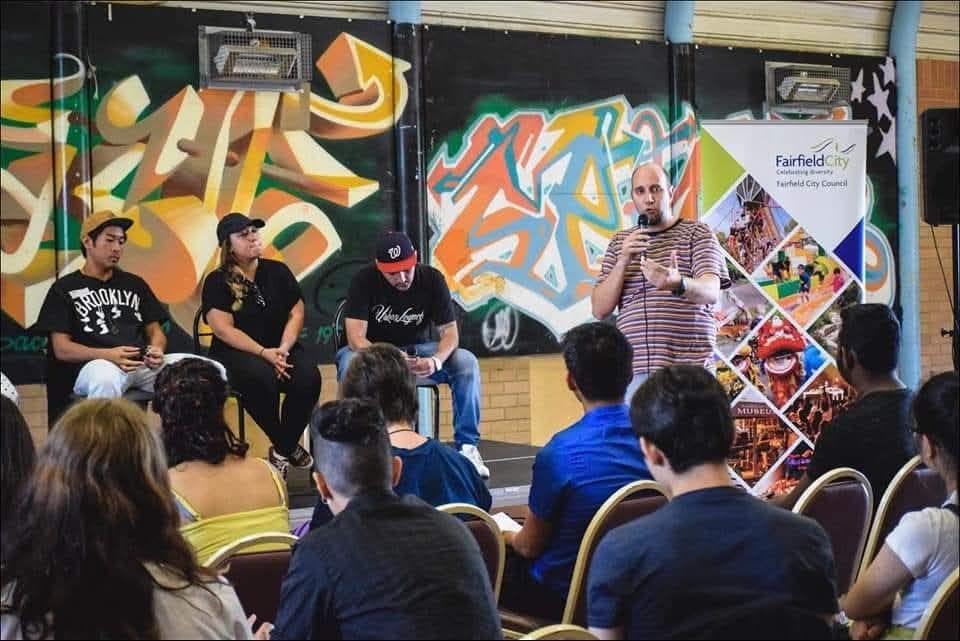
Slowing down felt risky. Exposing. Vulnerable. Like risking something.
And yet, what I came to see is that what’s more risky – and more dangerous – is not slowing down.
What slowing down asked of me was inner work before outer work. It invited me to pay attention to how I was relating, not just what I was producing. To be present rather than impressive. To work with the warm-up – mine and others’ – rather than my agenda or motivations.
That shift changed how I understand community, healing, leadership, group work, and capacity building.
This is where intimacy enters the conversation – not as something private or romantic, but as a communal quality. At this level, intimacy is about trust, safety, care, and the ability to show up without armour. It’s about belonging – not because you perform well, but because you are held in relationship. Because your value is inherent.
Anthropologist Tim Ingold describes kinship not as a fixed structure or bloodline but as an ongoing process of care and nurturance – something formed by growing together over time. That understanding resonates deeply with my experience.
Community alone does not guarantee belonging.
Kinship emerges when care, intimacy, and commitment are practiced again and again.
In much of our community and youth work, we speak about participation, engagement, and co-design. These are important ideas. But without relational safety and trust – without real connection – they can become thin or performative. People may show up, but they don’t fully arrive. They contribute but remain guarded.
Slowing down creates different conditions.
It allows people to be seen.
It allows grief to surface without being rushed to resolution.
It allows difference to be held without immediately needing to be resolved.
Over time, it invites people to offer their strengths not as outputs but as gifts.
This feels especially important now.
We are living in a time marked by isolation, polarisation, and a quiet exhaustion many people carry. In this context, choosing care, intimacy, and kinship is not soft, naïve, foolish, utopian, or pollyanna-ish. It may be one of the wisest responses available to us – a quiet form of resistance to a culture that fragments us and accelerates toxic doing.
Moving at the speed of trust can be an act of resistance.
And perhaps also a way of preparing ourselves to face uncertainty – and even systemic collapse – together, rather than alone.
Lately, this understanding has been shaping where my work is heading. Alongside youth, community, and place-based practice, I find myself increasingly drawn to smaller, more intimate self-development spaces – places where people slow down together, step out of professional roles, remove masks, and reconnect with their own spontaneity and life force.
Not to fix themselves – but to meet themselves more honestly, in relationship.
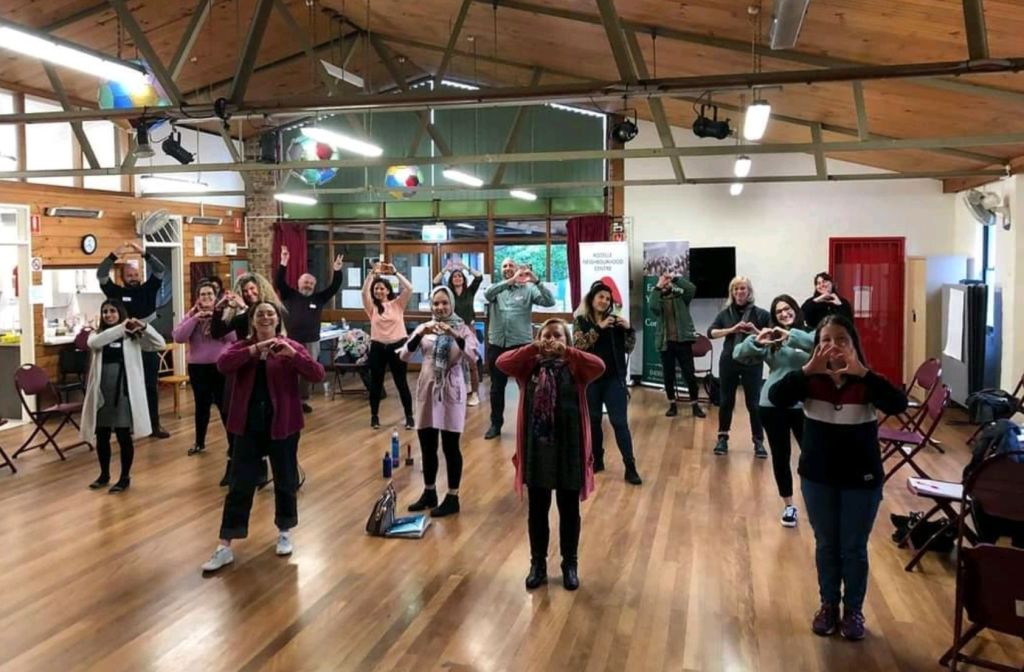
I don’t have definite answers to offer. Only better questions, and a growing conviction that how we move matters as much as what we do. That healing, community, and change do not begin with strategies alone, but with how we are together.
And that sometimes, the most meaningful work begins when we slow down enough to truly meet one another again – creating the mutuality that allows the work, whatever it is, to unfold.
What has slowing down made possible for you – in community, leadership, or relationship?
 Soulgen
Leave a comment