
I woke up at 3am the other night with a strong feeling that wouldn’t let me go.
Facilitation matters.
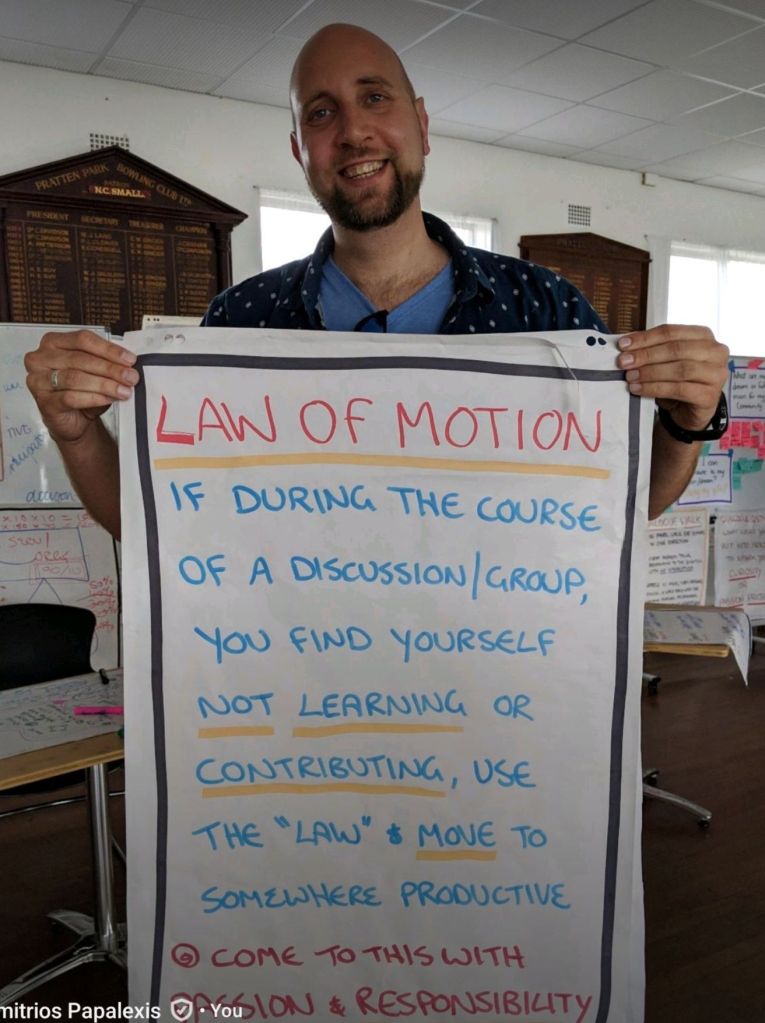
Not as a technique. Not as a role or job title. But as something essential for the moment we’re living in.
It matters because the world is facing problems that can’t be solved by experts alone.
Climate and climate grief.
Social cohesion.
Youth mental health.
Polarisation.
AI.
Trauma.
Isolation and loneliness.
Eroding trust.
You name it.
These are not technical challenges. They are human ones – complex, relational, emotional, and deeply lived. Interconnected. What some describe as a poly-crisis.
They require people to think, feel, make sense, and act together.
And most systems don’t know how to do that safely – or bravely.
Facilitators don’t provide the answers.
They make collective intelligence and shared action possible.
The problems are no longer technical
A technical problem has a clear pathway and a right answer. Most of what we face now doesn’t.
For complex, adaptive challenges, no single discipline, policy, or leader can hold the solution. What’s needed instead is:
dialogue across difference
shared meaning-making
collective decision-making
emotional literacy in groups.
This work can’t be delegated to experts or panels alone.
It requires new ways of gathering, listening, and being together.
That’s where facilitation comes in – not as a toolkit but as a relational practice.
We lost the art of gathering
Historically, humans gathered to:
grieve
decide
tell stories
resolve conflict
imagine futures
Modern systems outsourced these functions to bureaucracy, individual therapy, and heroic leadership. In doing so, we lost something essential – our relational infrastructure.
Facilitators – and hosts more broadly – are quietly rebuilding that infrastructure. Often invisibly. Often undervalued.
When facilitation is done well, people say:
“That was a great meeting”
“The group felt engaged”
“Something shifted”
What they rarely see is the invisible work underneath – presence, containment, pacing, and care.
From heroes to hosts
The hero model of leadership assumes:
the leader has the answers
responsibility is centralised
performance equals competence
That model collapses under complexity.
Hosting offers something different:
creating conditions instead of performing solutions
distributing responsibility as response-ability
mobilising lived experience, gifts, and local knowledge
trusting emergence rather than controlling outcomes
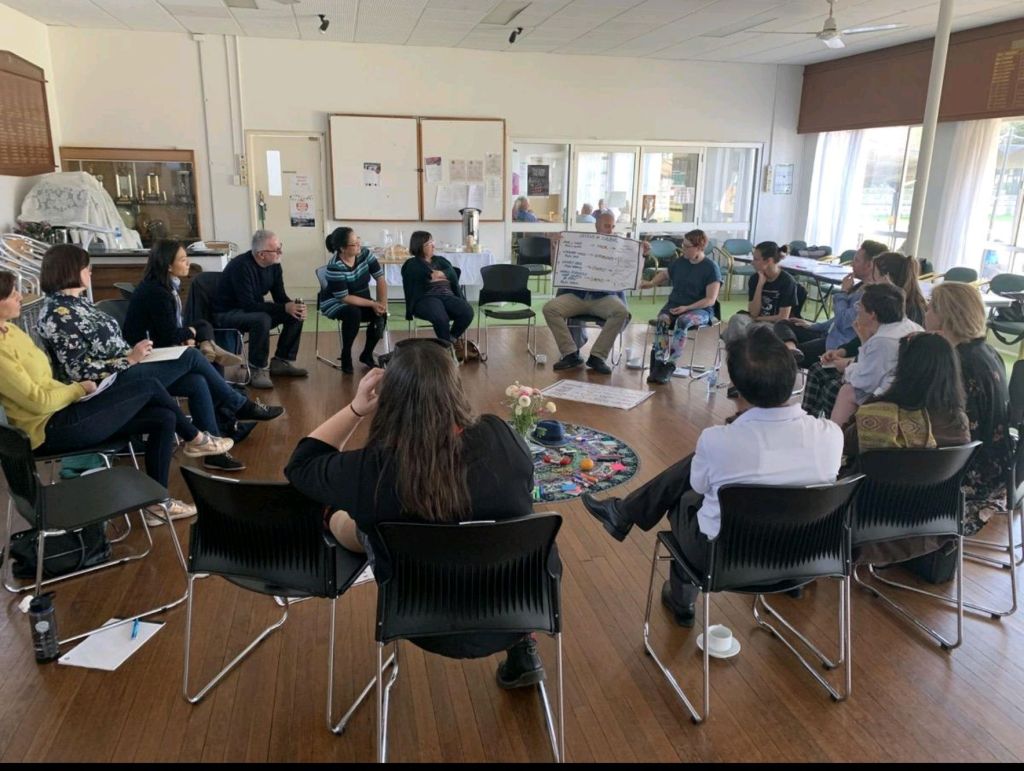
This isn’t anti-leadership.
It’s post-heroic leadership.
A simple way I now hold it is this:
Facilitation is the craft. Hosting is the stance.
Acolhimento
While working and training in Brazil, I encountered a word that named something I had felt many times but never quite articulated.
Acolhimento.
It doesn’t mean “welcome”.
It means being received.
Receiving someone as they are.
Making space for their presence, story, and emotion.
Offering care, dignity, and containment.
Saying – without words – you belong here, and you don’t need to perform.
Acolhimento isn’t a technique.
It’s an ethic.
It reveals something essential about facilitation and hosting – before we guide the process, before we ask questions, before we move toward outcomes, we receive.
People don’t lack voice – they lack containers
Everyone has a voice now.
What’s missing is safety, structure, listening, and integration.
Without reception, voice turns into:
noise
polarisation
burnout
disengagement
A good facilitator doesn’t simply amplify voice.
They create a container where voice can land, be heard, and integrated.
This is where facilitation moves from activity to responsibility and co-creation.
The work of our time
Facilitation is not a soft skill.
It’s a civilisational skill.
It makes possible:
belonging without sameness
influence without domination
leadership without ego.
These are the capacities societies need if they are going to live with difference and complexity without tearing themselves apart.
That’s why facilitation matters.
That’s why hosting matters.
Not as trends.
Not as techniques.
But as the quiet, essential work of our time.
Invitation
When have you been part of a process that genuinely made a difference?
Who is a facilitator or host whose craft you admire – and have you told them?
 Soulgen
Leave a comment