
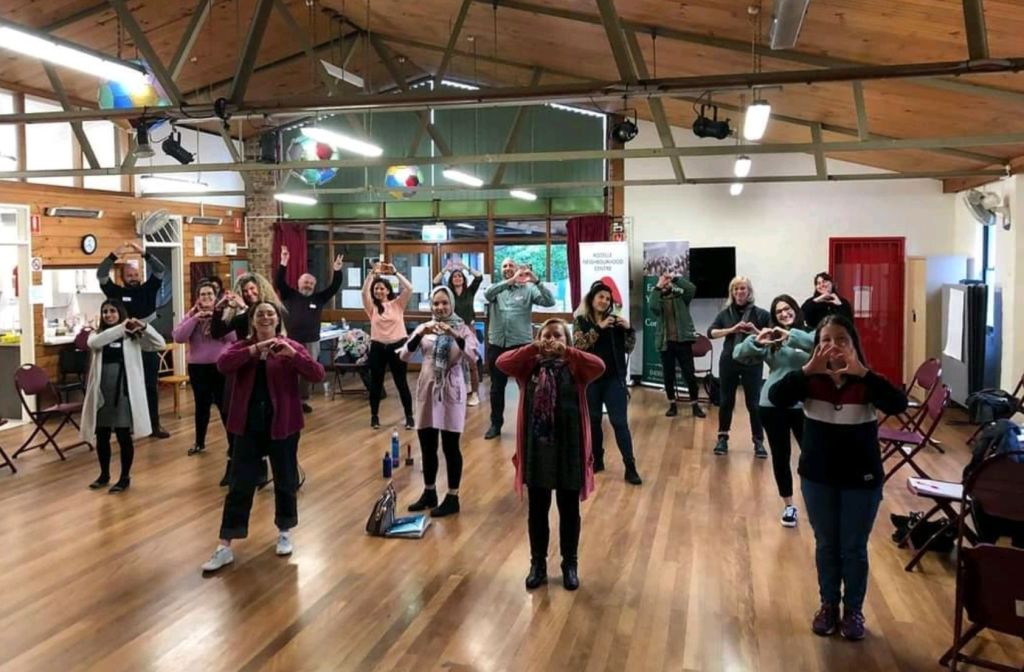
Why sustainable systems require regulated leaders and participatory cultures.
We need to rethink leadership.
Not as position.
Not as management.
Not as corporate authority.
But as the capacity to shape human systems in ways that are life-giving.
In communities, movements, councils, neighbourhoods, and organisations, leadership is not about control. It is about what we are creating together. It is about the quality of relationships, the sociometry of connection, the culture of participation, and the conditions for collective growth.
Sustainable leadership rests on three pillars: self-care, belonging, and stewardship.
1. Self-Care Is Not Personal. It Is Structural.
Burnout in community and social impact work is not an individual weakness. It is a systems issue.
When leaders do not tend to their inner world, the system absorbs the consequences:
reactivity replaces reflection
urgency overrides process
ego slips into decision-making
relationships fray
Self-care is not a spa day. It is disciplined self-reflection. It is therapy, supervision, embodiment, rest, exercise, honest dialogue and boundary-setting.
A regulated leader creates regulated environments.
A leader who can sit with discomfort without collapsing or dominating builds resilient systems.
If we want sustainable communities, we need leaders who take their own psychological hygiene seriously.
2. Belonging Is the Infrastructure of Healthy Systems
Belonging is not sentimental. It is strategic.
Every system has a sociometry – patterns of inclusion, exclusion, influence and silence. Leaders are constantly shaping this whether they are aware of it or not.
Who gets invited? Whose voice is amplified? Who is peripheral? Who feels chosen?
Sustainable leaders do not centralise power. They distribute it. They host rather than hero.
They understand that participation is not a consultation exercise – it is a culture.
Belonging reduces fragmentation. It increases ownership. It strengthens adaptability. It builds trust capital.
Communities do not thrive because of strong individuals alone. They thrive because of strong relational fields.
3. Leadership Is Stewardship of the Field
In a capitalistic culture obsessed with personal success, leadership is often framed as individual ascent.
But sustainable leadership is stewardship.
It asks: What am I modelling? What dynamics am I reinforcing? What emotional climate am I normalising? What future am I shaping through this process?
Leadership in community work is subtle and powerful. It lives in the way meetings are facilitated, how conflict is held, how boundaries are set, and how responsibility is shared.
It requires both warmth and containment.
It requires clarity without control.
It requires authority without hierarchy.
From Heroes to Hosts
The work of our time is not to produce more heroes. It is to cultivate more hosts.
Hosts of dialogue.
Hosts of participation.
Hosts of collective imagination.
When leaders integrate self-care, belonging and stewardship, they move beyond self-actualisation toward collective fulfilment.
Their legacy is not measured in status.
It is measured in systems that are more humane, more participatory and more resilient than when they arrived.
This is the leadership our communities need.
And it begins within.
If this resonates – if you’re thinking about the culture you’re shaping, the emotional climate you’re modelling, or the kind of legacy you want your leadership to leave – there is practical work behind these ideas.
I work with leaders, teams and communities to strengthen belonging, participation and regulated leadership in complex systems.
If you’d like to explore your leadership or your organisational culture in this way, feel free to reach out.
 Soulgen
Leave a comment