
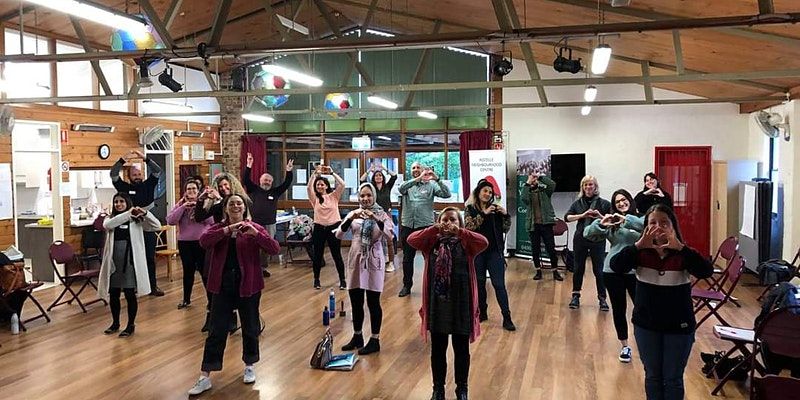
There’s something happening beneath the surface of our communities.
You can feel it in conversations.
You can see it in the way people move through spaces.
You can hear it in what’s said – and what’s not being said.
People are around each other…
but not really with each other.
We are more connected than ever digitally – yet increasingly alone.
And we’re starting to name the cost.
Public health leaders are now calling it what it is:
a loneliness epidemic.
🌱 The quiet loss of third spaces
In my work across metro and regional NSW, I see this playing out in different ways.
People care.
Organisations care.
Systems are trying to respond.
But something more fundamental is missing.
The spaces where connection happens are disappearing – or have never been intentionally created.
Sociologist Ray Oldenburg called them “third places.”
Not home.
Not work.
But the spaces in between.
The café.
The park.
The community hub.
The place where you bump into someone, stay a little longer, and feel part of something.
When these spaces disappear, something else goes with them:
– spontaneous connection
– shared identity
– everyday belonging
🧠 A public health issue, not just a social one
This is no longer a “nice to have.”
Research increasingly shows that third spaces contribute to:
– mental wellbeing
– reduced loneliness
– stronger social support networks
– protection against long-term health issues
When these spaces vanish, people don’t just lose places to gather.
They lose:
– places to be seen, to contribu, to belong
🧭 What I’m seeing on the ground
Across my work with councils, NGOs and communities, a pattern keeps emerging.
We invest heavily in services, programs, consultations and
strategies
But often overlook something more fundamental:
👉 the spaces where relationships form
At a recent workshop in an affluent council, the question came up:
“What actually makes a place work?”
Not just function.
Not just look good.
Not just liveable – but loveable.
And the answer wasn’t more programs.
It was:
– connection
– participation
– shared ownership
🧩 Third spaces don’t just happen
One of the most important shifts is this:
👉 Third spaces are not accidental – they are designed
Take Cradles to Crayons in the United States.
They didn’t set out to create a “third space.”
They set out to organise volunteers.
But something else emerged.
People came to sort clothes.
They stayed because they felt connected,
they felt useful,
they felt part of something.
Over time:
relationships formed, rituals emerged, and belonging grew
That’s the insight:
“Third spaces are not just physical. They are designed experiences of connection.”
🌍 Global signals, local relevance
We’re seeing this pattern globally.
In the United States, the decline of third places is closely linked to rising loneliness and disconnection.
Across Europe – particularly in countries like France – food, culture and shared public life are being reactivated as essential to social cohesion and even democratic life.
Because when people stop gathering…
they stop relating.
And when they stop relating…
trust begins to erode.
Third spaces are not just social infrastructure.
They are democratic infrastructure.
And here in Australia, we’re facing:
– increasing isolation,
– rising cost of living pushing people out of community life
– growing multicultural complexity and
– social cohesion pressures linked to global and local tensions.
Without always having the spaces to hold it.
🧭 A place-based response
This is where place-based practice becomes critical.
As I explored in my article
Place-Based Leadership: The Practice That Brings a Place to Life,
leadership in place is not about delivering into communities.
It’s about:
activating what’s already there,
connecting people,
creating the conditions for participation.
Third spaces are a natural extension of this.
Not just as infrastructure.
But as:
👉 living spaces of relationship, contribution, and shared meaning
🎒 Why this matters for young people
Youth research continues to point to something simple but powerful:
Young people need places where they can gather informally, express themselves, feel safe and seen, and
connect beyond structured programs.
Not everything can be a program.
Not everything should be facilitated.
Sometimes what’s needed is:
👉 a place
👉 a rhythm
👉 a reason to return
🤝 From isolation to participation
One of the most overlooked pathways to building third spaces is collective action.
When people come together to contribute:
they meet others who care, see impact, feel part of something bigger
This shifts:
isolation → connection
helplessness → agency
disconnection → belonging
But this doesn’t happen by accident.
It requires intentional design:
– spaces where people work side-by-side
– visible impact
– shared rituals
– opportunities to return.
🌊 From programs to places
In Deniliquin, I’ve seen early signs of what this can look like.
A local group of community leaders beginning to reimagine an underutilised council space as a youth hub.
Not just as a service.
But as a place of:
recovery, connection, belonging and youth-led action
Especially in the wake of local challenges, this kind of space becomes more than a venue.
It becomes part of the community’s healing journey – and a shift in the narrative about young people.
🧩 The opportunity for Australia
What would it look like if we took this seriously?
If councils, NGOs, businesses, communities, and local leaders came together to co-create and activate third spaces across our cities and regions?
Not as one-off projects.
But as ongoing social infrastructure.
Spaces where:
different sectors, collaborate,
communities shape what happens
and belonging is built over time
Because when we get this right:
People don’t just attend.
They participate.
They don’t just receive.
They contribute.
And slowly, something shifts.
🧭 Final reflection
We often ask:
How do we fix isolation?
How do we improve mental health?
How do we strengthen social cohesion?
But maybe the question is simpler:
Wh
Where can people come together – regularly, meaningfully, and as themselves?
Because when we get that right…
Everything else starts to move.
✨ Soulgen note
This is the work I find myself drawn to more and more.
Not just facilitating sessions.
But helping communities uncover and co-create the spaces where life happens between them.
The spaces where people meet, return, contribute, and belong.
Because in the end:
It’s not just about programs.
It’s about people.
And the places that bring them to life.
📚 References
The Great Good Place
Finlay, J. M., et al. (2019). Closure of third places and wellbeing
Choi, Y. J., et al. (2022). Third places and loneliness
Borowski, E., et al. (2023). Third place closures and mental health
Kowalkowski, J., et al. (2025). Third place use and wellbeing
Urban Institute (2024). Third places and community wellbeing
Newport Healthcare (2026). Youth loneliness and connection
Main Street America (2025). The state of Main Streets
Cradles to Crayons. Designing volunteer spaces for belonging
Place-Based Leadership: The Practice That Brings a Place to Life
 Soulgen
Leave a comment