
A reflection from a session I ran recently at the Youth Work Conference – when relational practice came to life in the most unexpected way.
When the Threads Came Together

Last week, I had one of those moments where what I’ve been sensing, championing and practising for years finally came to life – threads coming together to form a whole.
I arrived at the conference ready to run a playshop using Camp Venture – a session on strengths-based participation. I had a loose structure in mind, but I was open to improvise depending on who showed up, the vibe, and the energy in the room.
Conferences are incredible places to connect and learn. Yet sometimes, I find that the pace and information overload make it hard to slow down and connect more meaningfully – beyond the coffee aisles and shared lunches – in the here and now
Before my session, Jarrod Wheatley spoke about relational care – how relationships help young people move out of hypervigilance – and shared the idea of a child-connection system rather than a protection system. His words struck a deep chord.
They named something I’ve long felt: what’s missing in many systems is a shift into relational practice – something I’ve been exploring for years in my trainings, workshops, circles, community work, critical-incident responses, and even in keynote settings.
From my own experience – particularly in therapeutic, healing, and restorative work – the best form of self-regulation is co-regulation: the kind that happens when we are fully attuned to another person, listening deeply, sensing, and meeting them where they are.
Shifting the Space

When I walked in for my session, a young MC introduced me and my work. I looked around at the theatre-style setup – rows of chairs, faces turned toward me, microphone in hand. I could already sense that if I stayed in presentation mode, people would disengage.
So I took a breath and said:
“In a traditional setup, I’d be the expert talking for 45 minutes with some audience participation. But that’s not what we’re going to do.”
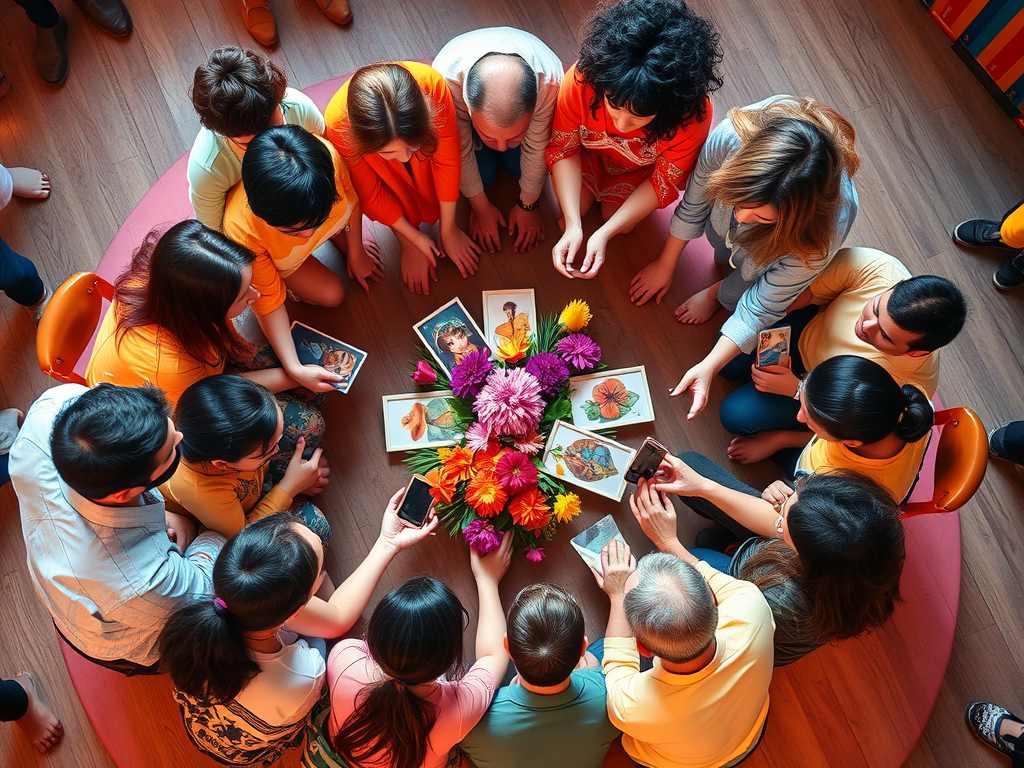
We moved the chairs into a circle. I laid down Camp Venture cards – each representing strengths and community assets – and invited everyone to choose one that spoke to them.
I encouraged people to listen with attention and speak with intention or pass if they preferred. If something someone said resonated, they could snap their fingers, poetry-slam style. No pressure – just gently warming them up to connection.
At first, people were shy and quiet. Then something shifted.
People began to connect. They listened deeply, shared honestly, and responded to one another. The space came alive – not because of slides or a strict formula, but because we stepped into presence and relationship.
Through simple relational practices – listening, holding space, responding, and connecting – the group warmed up to itself. The little bar-theatre we were in became a living circle: moments of truth, eye contact, applause, laughter, and connection.
The group came to life – a true Morenian moment!
What I Realised
That experience reminded me that the next evolution of my work isn’t about more frameworks or tools – the horizontal dimension. It’s about creating the conditions for change – the vertical dimension – through relational praxis: how we show up, sense, and co-create relational safety, participation, and shared action that lead to real change.
If we’re to shift systems to become relational, we must start with ourselves, our teams, and our collectives.
In my own self-development journey, I’ve learned how easily we can slip into coping roles – performing, people-pleasing, joking too much, or withdrawing – roles that once helped us survive but now can distance us from authentic connection. It took years of supervision, inner work, and courage to intervene in my own warm-up and learn to stay in relationship – with myself and with others – especially in challenging moments.
That’s the real work behind any method or facilitation tool. Whether I’m using Circle Way, psychodrama, co-design or ABCD, what matters most is the quality of my presence – my ability to stay connected, model relational practice, and take leadership in a way that invites others to relate more deeply to one another.
And beyond individual facilitation, relational practice also means co-learning and co-design – building communities of practice, inclusive spaces, and collaborative groups where shared reflection, mutual support, and collective growth can thrive.
At a community level, these same principles help build social capital, foster social cohesion, and nurture the mutuality that holds us together – reminding us that connection is both our greatest strength and our most powerful resource for change.
After all, people need to feel safe, included, invited, and welcomed before they can offer their gifts – and we can’t have a strengths-based practice without relationships.
A Direction Still Unfolding
This direction is still unfolding, but it feels deeply right.
And as always, it starts with how we relate – here, now, together.
(And I wonder… even here on online blogs and LinkedIn – often an echo chamber – can we make space for real connection, spontaneity, and co-creative relationships too?)
🔗 Discover Camp Venture
Learn more about the game and its applications for youth and community work at IdeationGames.com.au


 Soulgen
Leave a comment