
Most evaluation frameworks fail to capture what actually matters in youth and community work.
They measure outputs – attendance, participation rates, number of activities delivered.
But they often miss the deeper shifts that determine whether something truly works:
- trust between people
- a sense of belonging
- confidence to contribute
- relationships forming and strengthening
- people stepping into shared ownership
These are not side outcomes.
They are the foundation of meaningful, lasting change.
The gap in how we measure impact
In much of my work with councils, communities and youth-led initiatives, I see a recurring tension.
On one hand, there is a genuine desire to support participation, inclusion and community leadership.
On the other, evaluation frameworks often pull us back toward what is easiest to measure – rather than what is most meaningful.
As a result, some of the most important outcomes remain invisible.
And when something isn’t visible, it becomes harder to:
- justify
- invest in
- or sustain over time
This is where many well-intentioned initiatives lose momentum – not because they aren’t working, but because their impact isn’t being recognised in the right way.
A note on Social Return on Investment (SROI)
There has been a growing push to translate social impact into financial terms through approaches like Social Return on Investment (SROI).
In some contexts, this can be useful – particularly when communicating with funders or making the case for investment.
But it also has limitations.
Not everything that matters in youth and community-led work can, or should, be reduced to a dollar value.
When we over-rely on financial proxies, we risk flattening complex human experiences – such as trust, belonging, identity and participation – into something they are not.
The issue is not the existence of these tools, but how they are used.
If they become the dominant lens, they can unintentionally distort the very work they are trying to represent.
The opportunity is to recognise their limits – and to complement them with approaches that can capture what is relational, contextual and lived.
What if we measured what actually matters?
If we take youth and community-led work seriously, then our approach to evaluation needs to evolve.
It needs to:
- reflect the relational nature of this work
- include the voices and perspectives of those involved
- capture change as it unfolds – not just at the end
This doesn’t mean abandoning structure or rigour.
It means broadening what we consider to be valid evidence.
Expanding how we understand “evidence”
In practice, this might look like:
- Stories and lived experience
- Capturing how people describe their own growth, connection, and sense of agency.
- Community-defined indicators
- Asking participants what success looks like for them – and tracking that over time.
- Participation and contribution
- Looking at who is showing up, who is influencing decisions, and how roles are shifting.
- Creative and embodied expression
- Using methods such as storytelling, visual work, or group processes to surface insights that don’t emerge through surveys alone.
These approaches don’t replace traditional data.
They complement it – and often reveal what numbers alone cannot.
Expanding Evidence
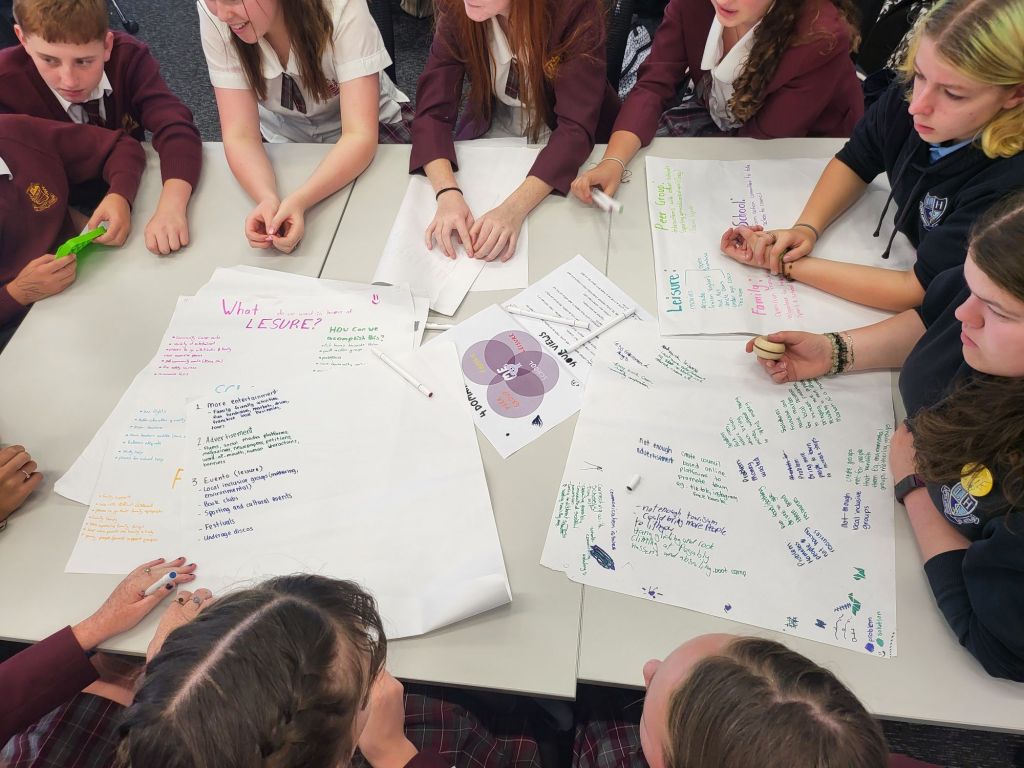
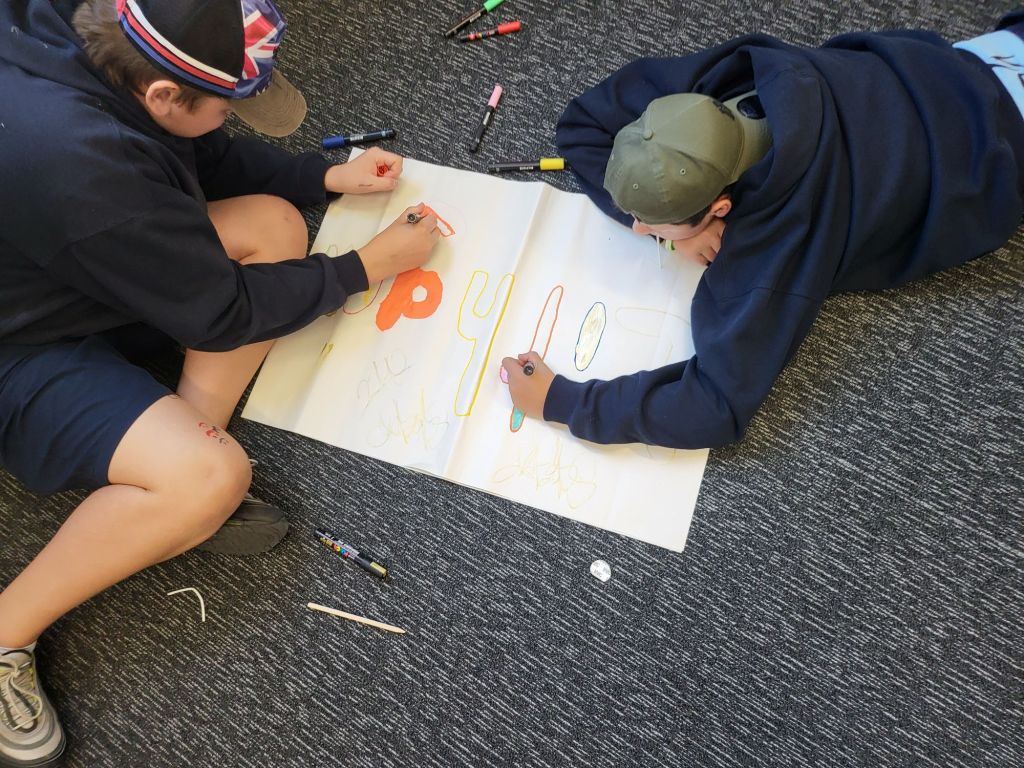
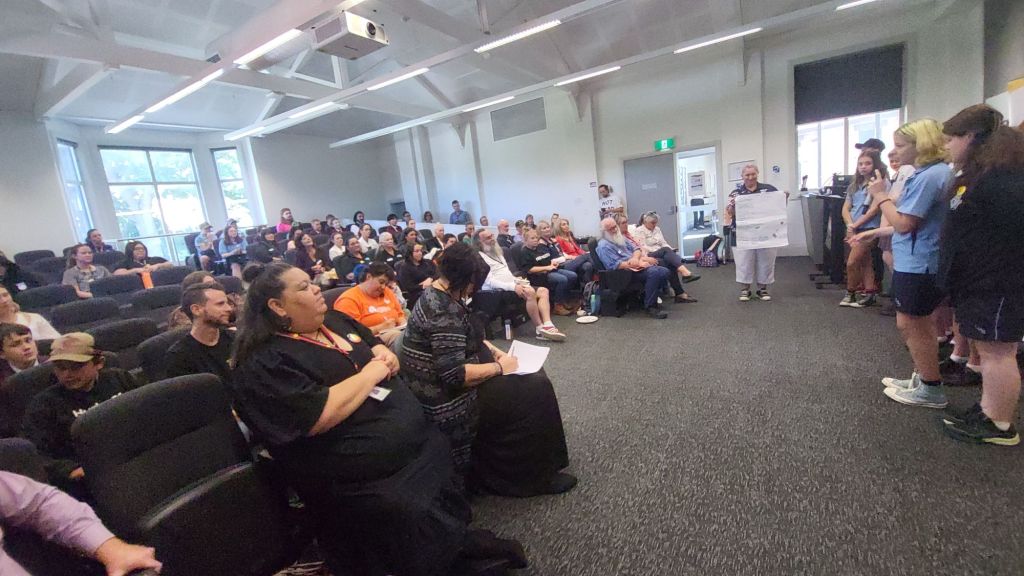
In a recent youth summit, I facilitated a session where young people were invited to identify challenges and aspirations for their community, to present back to councillors, the mayor and professionals.
While many groups were actively engaging, two groups remained quiet. One included students with additional needs, and another group lacked confidence and initially said they had “nothing to say.”
After checking in with a support teacher, I learned that some of the young people felt their town was “garbage.” Rather than seeing this as disengagement, I treated it as a starting point.
We invited them to draw a large bin on butcher’s paper and place inside it everything they didn’t like about their community – “nothing to do,” “smelly streets,” “strange people.” Then, outside the bin, we asked them to write what they wanted instead – youth events, adults who listen, better mental health support.
With support from a youth mentor, they went on to present their ideas at the summit – raw, honest, and powerful.
In the other group, when young people said they didn’t know how to express themselves, we invited them to create a simple poem – starting with rhyming words, then building meaning from there. What emerged was a thoughtful and creative piece that they confidently shared.
These moments don’t easily translate into traditional evaluation metrics.
But they represent something significant: a shift from silence to expression, from disengagement to participation, and from doubt to contribution.
The question then becomes – how do we recognise and value this kind of change?
From engagement to shared leadership
These kinds of shifts are not isolated moments.
They reflect a broader pattern that shows up across many projects.
Across different projects, a consistent pattern emerges:
Engagement doesn’t always lead to participation.
Participation doesn’t always lead to shared leadership.
If we only measure the early stages (for example, attendance), we risk missing whether deeper shifts are actually happening.
Evaluation, when done well, can help us understand:
- whether people feel a genuine sense of belonging
- whether they are contributing, not just attending
- whether leadership is becoming more shared and distributed
This is where the real impact lies.
Making the invisible visible
The opportunity here is not to make evaluation more complicated – but more meaningful.
To develop approaches that:
honour the human and relational nature of this work, make intangible outcomes visible and communicable, and
support both community insight and organisational accountability.
When we do this well, evaluation becomes more than a reporting requirement.
It becomes a tool for reflection, learning and strengthening the work itself
If we continue to measure only what is easy to quantify, we risk undervaluing the very things that create lasting change.
But if we expand how we understand impact, we create the conditions to recognise – and invest in – what truly matters.
Invitation
If you’re working in youth, community or place-based initiatives and want to better capture what matters – not just what’s measurable – I’m always open to a conversation.
Whether it’s shaping an evaluation approach, strengthening participation, or connecting this work to broader systems and strategy, this is an area I’m deeply engaged in through Soulgen.
 Soulgen
Leave a comment