

Pip: What if the first question you asked a community wasn’t “what’s broken here” but “what do you already have?” That’s the thread running through dsoulgen’s recent work, and it turns out the answer is usually more interesting than the problem.
Mara: This episode follows one extended case study — a community development program built around a river, the people who care about it, and an asset-based approach to turning that care into action. Let’s start with the Cooks River and what grew along its banks.
From Passion to Action: Building the Cooks River Changemakers
Pip: The setup here is worth sitting with. The Cooks River Alliance didn’t hire facilitators to deliver a fix. They brought people together around a different question entirely — not what needs solving, but what do the people who already care about this place have to offer.
Mara: The post frames it this way: “The free seven-week Changemakers Course invited people who cared about the Cooks River to explore a different question: how might we use our own skills, knowledge, passions and relationships to work with others and contribute to its future?”
Pip: So the premise is that a catchment of half a million people is already full of assets — knowledge, networks, passion — and the job is connection, not rescue.
Mara: Right. And the methodology followed that logic. Open Space Technology created what the post calls a marketplace of ideas — participants put forward possibilities they cared about, gathered others around them, and started building from there. No predetermined project list.
Pip: Which is a genuinely different posture. Most programs hand people a survey. This one handed them a question: who cares about this, and what could we try?
Mara: The field trip with Jennifer Newman, then a lecturer in Aboriginal Studies at the University of Sydney, deepened that grounding — connecting participants to the river’s history across more than a thousand generations of Aboriginal presence before urbanisation reshaped it.
Pip: And the prototypes that came out of it — family picnics, kayak clean-ups, front-yard blitzes, full-moon walks — none of them required a grant or a committee. They required people deciding to start with what they had.
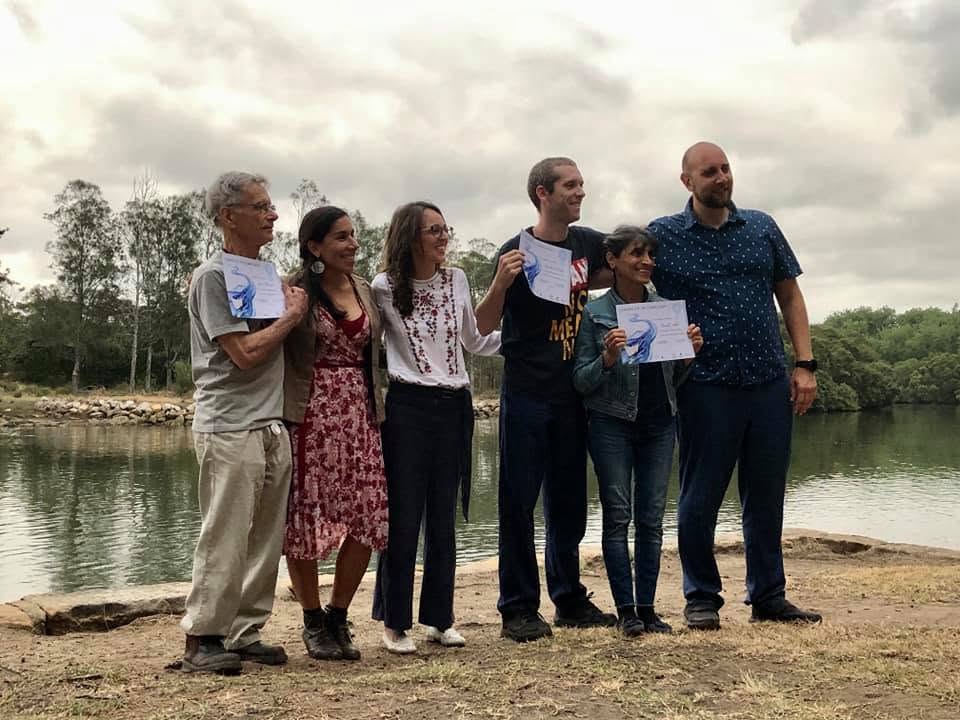
Mara: The graduation session captures the emotional weight of that. Participants were brought into Circle, and one reflected: “I usually like to look at things from the Gods, but down here on earth the view is pretty good too.”
Pip: That’s someone discovering the ground-level view has its own kind of clarity.
Mara: What persisted after the course ended was the Cooks River Changemakers Network — a way for participants to stay connected, share opportunities, and keep acting together without needing the formal program to hold it.
Pip: The course had an end date. The relationships, as the post puts it, didn’t need to.
Mara: The throughline is straightforward: start with what’s strong, create conditions for contribution rather than just participation, and trust that the people in the room already have something real to bring.
Pip: Next time — what else is already in the room that nobody thought to ask about.
A note about the podcast: This audio version was created with the help of an AI tool, drawing on the original article and Cooks River Changemakers story written by Dimitrios Papalexis.
Leave a Reply