

What changes when we stop asking young people only what they need – and start asking what they care about, what strengths they bring and what they would like to create?
In 2020, Rozelle Neighbourhood Centre contracted Soulgen to lead a three-month youth consultation and co-design process across Rozelle, Balmain, Lilyfield and the wider Inner West.
The brief was to explore what young people wanted from local youth programming and begin scoping a youth-focused social enterprise that could respond to those aspirations while creating opportunities for participation, connection, skills development and employment.
Rather than designing something for young people and then asking them what they thought, we approached the project through an Asset-Based Community Development (ABCD) lens: start with young people’s strengths, passions, relationships and ideas – and connect those with the assets already present in the wider community.
Building an ecosystem around young people
One of our first steps was not to design a program.
It was to build relationships.
Soulgen connected with local organisations already working alongside young people, including Inner West Council, PCYC Balmain, Youth Off The Streets, Warranarra Centre, Sydney Local Health District’s Youth Block, Addison Road Community Centre and others.
From this grew a collaborative Youth for Impact – Young Changemakers initiative, bringing together young people, staff, students and community partners around the process.
Young people weren’t simply respondents to a consultation. They participated in meetings and community conversations, helped co-design the survey and promotional materials, and supported outreach and discovery activities.
This was an important part of the ABCD approach: don’t just map people’s needs. Discover their capacity to contribute.
Changing the questions we ask
Together with young people, staff, students and project partners, we co-designed a Discovery Tool.
Rather than focusing only on problems or service gaps, it explored three areas:
Vision — What kind of community do young people want to be part of?
Ideas — What projects and activities would they like to create or participate in?
Strengths — What skills, passions, knowledge and gifts could they contribute?
The tool became both a survey and a way of starting community conversations, helping us understand young people’s aspirations while identifying strengths that could become building blocks for whatever emerged.
Taking engagement into the community
We didn’t expect young people to come to us.
A team of young people, staff and volunteers took the Discovery Tool into the community through outreach at Rozelle Markets, Woolworths Balmain and PCYC youth programs.
We also facilitated three creative Discovery Workshops at PCYC Balmain, using PhotoVoice, dance, theatre games, magic and arts-based activities to create different ways for children and young people to express their ideas.
Community conversations extended the process to young people from Youth Off The Streets, Warranarra Centre, Youth Block and international student communities.
Across the process, 60 Discovery Surveys were completed, alongside three Discovery Workshops, three outreach events and four Community Conversations. The project report recorded around 300 people involved across the broader consultation activities.
From hundreds of ideas to four priorities
As we listened, patterns began to emerge.
Four themes consistently mattered to young people:
Environment and sustainability
Social connection and solidarity
Sport, recreation and creative activities
Volunteering and work experience
But an ABCD process also asks another question:
What do young people already have that could help make these things happen?
Young people identified an extraordinary range of assets – leadership and volunteering experience; audio-
visual, writing, research and social media skills; cooking, art, drama, dance and creativity; environmental knowledge; mentoring; cultural awareness; and simply their willingness to give time and support to others.
Suddenly, we weren’t looking at a list of youth needs.
We were looking at a community of potential contributors.
What if one place could connect all four?
As we brought together what young people had told us, the strengths they could contribute and the assets available around them, an idea began to take shape:
A youth-led environmental social enterprise café.
Not simply a café.
The concept was for a versatile, safe and inclusive youth-friendly space that could bring the four priorities together.
Environment and sustainability could come alive through food rescue, urban farming, sustainability conversations and youth-led environmental projects.
Social solidarity could be expressed through community connection and initiatives such as free food or pay-it-forward coffee.
Arts and activities could include music, theatre, podcasting and cooking.
And the social enterprise model could create volunteering, work experience and skills-development opportunities for young people.
The café therefore wasn’t an idea imposed at the beginning of the consultation.
It emerged from connecting what young people cared about with what they could contribute and what the community could potentially support.
That is where co-design and ABCD become powerful together.
Building the capacity around the idea
For community-led initiatives to last, it isn’t enough to build young people’s capacity. The organisations and adults around them need capability too.
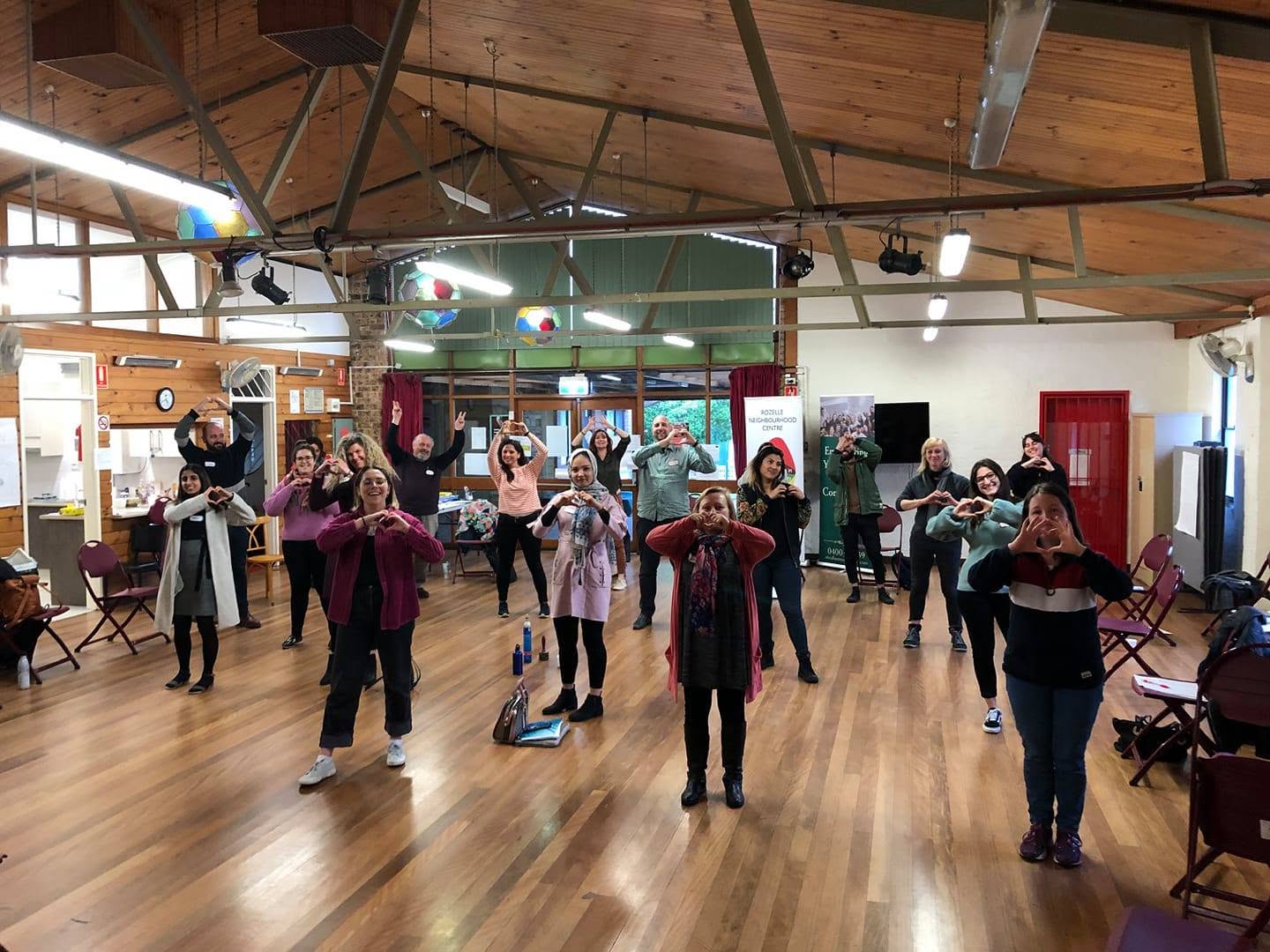
As part of the project, Soulgen facilitated an Asset-Based Community Development training for 20 staff and practitioners from local organisations at the Jimmy Little Community Centre in Lilyfield.
The process was also documented by a local young filmmaker from the target community, creating another opportunity for a young person to contribute their skills while capturing the project’s story.
This meant the project was working at several levels at once:
young people’s voice and leadership, organisational capability, community relationships, local partnerships and the beginnings of a wider ecosystem capable of supporting the idea.
From consultation to possibility
By the end of the initial three-month process, we hadn’t simply produced a consultation report.
We had co-designed an engagement process with young people, built partnerships across the local youth ecosystem, surfaced young people’s aspirations and assets, strengthened sector capability and developed a tangible social-enterprise concept grounded in what young people had actually told us.
The proposed next phase was deliberately practical: continue engaging young people and schools, deepen asset mapping, develop the business case and program logic, identify a location, strengthen partnerships and further co-design the café to move it from concept towards reality.
What we learned
This project reinforced something that remains central to Soulgen’s approach to youth and community development:
Youth voice is important. But voice alone isn’t the destination.
When we ask young people about their aspirations and their strengths, invite them into the design process, connect them with adults and organisations that can open doors, and create genuine opportunities to contribute, consultation can become participation.
Participation can become co-design.
Co-design can become leadership.
And ideas can become possibilities for collective action.
That’s the difference between designing a service for young people and creating the conditions to build something with them.
Project at a glance
Client: Rozelle Neighbourhood Centre
Location: Rozelle, Balmain, Lilyfield and wider Inner West
Soulgen’s role: Youth engagement, ABCD, co-design, stakeholder engagement, asset mapping, facilitation and sector capacity building
Methods: Asset-Based Community Development · creative youth engagement · co-design · PhotoVoice · theatre and arts · community conversations · outreach · asset mapping · storytelling
Reach: 60 Discovery Surveys · 3 Discovery Workshops · 3 outreach events · 4 Community Conversations · approximately 300 people involved across consultation activities · ABCD training for 20 local practitioners
Key outcome: A co-designed concept for a versatile youth-focused environmental social enterprise café, bringing together sustainability, social connection, creativity and recreation, volunteering and pathways to work.
Want to learn how to apply Asset-Based Community Development (ABCD), bring young people’s gifts and community assets to life, and build belonging? Join Lens on Strengths: Youth, Belonging and ABCD, our signature training this November.
Find out more and book your place
See video of the initiative here:
Leave a Reply