
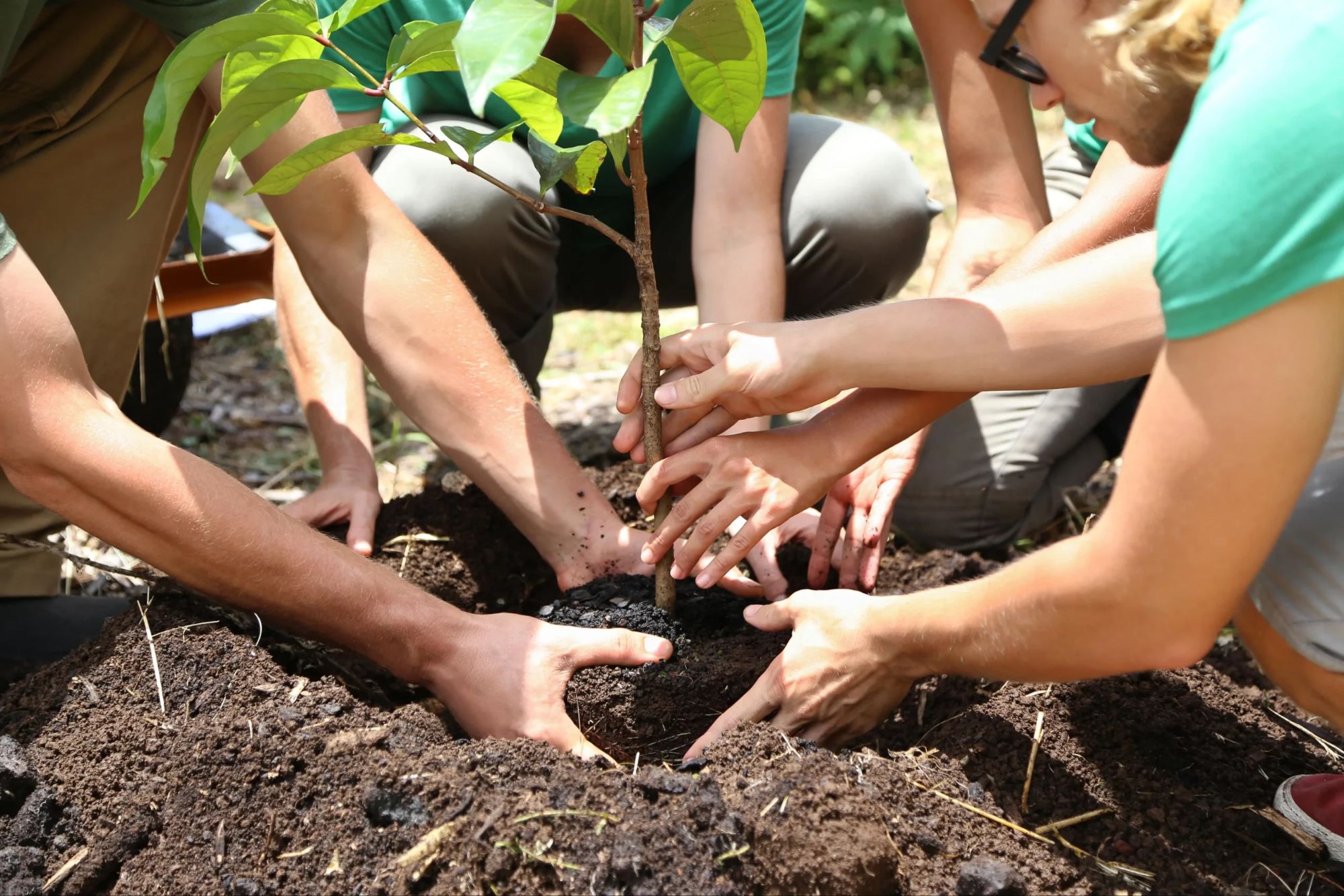
I keep coming back to this idea lately: the power and beauty of the small.
Don’t get me wrong. We need the big stuff too. Better systems, better policy, better services, better places, more investment. Absolutely.
But while we’re trying to change all of that, what can we do now, with what’s already around us?
Sometimes quite a lot.
A coffee. A bench. An unlocked garden. A shared meal. Some paint. A street party. A conversation with someone you’ve walked past 20 times but never actually met.
Small encounters. Potentially big ripples.
Through our work at Soulgen, I’ve become increasingly fascinated by these little moments where people cross paths and something happens. Sometimes nothing happens. Sometimes it’s just a hello.
But sometimes a hello becomes a conversation. A conversation becomes a relationship. Someone discovers that the person living three doors down knows how to fix bikes. Someone else grows pumpkins. Someone can cook. Someone loves magic. Someone needs help moving a couch.
And somewhere in that slightly messy, unpredictable process, community starts happening.
Community development practitioner Peter Kenyon talks about not waiting for the “white cavalry” to arrive. I love that idea. Not because systems, services and investment don’t matter, they absolutely do, but because sometimes we’re so busy looking for what’s missing that we stop seeing the treasures sitting right under our noses.
The people. The gifts. The relationships. The weird hobbies. The underused spaces. The people who know people.
Which brings me to something we’ve become increasingly interested in:
Bumping spaces.
So… what’s a bumping space?
It’s probably less complicated than it sounds.
Some of the most important community-building doesn’t happen in a workshop, consultation or beautifully designed strategic plan.
It happens because people bump into each other.
At the park. Outside school. At the shops. In a community garden. Sitting on a bench. Waiting for the lift.
Sometimes even during a false fire alarm when everyone in an apartment building unexpectedly ends up downstairs together 😂
Or at a street-warming party in a new neighbourhood where the smell of woodfired pizza gives people an excuse to wander outside and finally meet whoever has been living four doors down.
Or around a mobile café van deliberately parked somewhere without a café.

The coffee isn’t really the point.
The lingering is.
Perhaps the best way to explain it is through a community development initiative I was involved in at Villawood, in South West Sydney, where we started experimenting with some pretty simple things and discovered just how much can grow when you create the conditions for people to bump, connect and contribute.
We had a community garden. There was just one problem.
It was locked.
A small group was using it, but many of the people living around it weren’t.
So we did a little investigating and managed to get it unlocked.
Bunnings helped with tools. Residents brought the gardening knowledge. Slowly, more people started coming in.

Then residents told us something that still lingers in my memory.
“We don’t see children playing anymore.”
They were genuinely sad about it. And I remember feeling sad too. I grew up in a neighbourhood in Volos, Greece, where playing outside in the street was just part of childhood.
So there was something about hearing “we don’t see children playing anymore” that stayed with me.
We could have let that comment become another finding in a consultation report.
Instead, during the school holidays we invited local kids and families to come and paint the garden fences.
And suddenly there were kids in the garden again.
And colour. And some smiles. 😊
Parents came. Other residents wandered over. People stopped. Talked. Watched. The place became noisy, colourful and alive.
Nothing revolutionary happened that afternoon.
And yet, something did.
People had another reason to be together.

Then we opened the doors a little wider
The community centre was already being used by different cultural groups, which was great. But we started wondering what might happen if it became more of a whole-of-community space too.
And then stuff started popping up that we hadn’t necessarily planned.
A food exchange. Bicycle groups. People helping green each other’s front and back yards. Tutoring. Someone helping someone else with a removal.
And this is where it gets interesting.
Fiona had a pumpkin from the garden. Fatima had homemade recipes. Ally had trained as a chef overseas.
Pumpkin + recipes + chef = smells like lunch to me.

Okay, community development isn’t quite that simple.
But there is something in it.
When you start with people’s gifts rather than only their needs, different possibilities become visible.
And once people have somewhere to meet, those gifts can start finding each other.
And then services started coming in too
As more people started using the community centre and relationships grew, something else happened.
The centre became a trusted place where services could connect with residents too.
Instead of expecting people to navigate unfamiliar services, organisations and systems, or travel somewhere else for support, we started bringing some of those services into a place where people were already coming and relationships already existed.
Residents could connect with support around housing, alcohol and other drugs, mental health, health and the NDIS.
And because there were people around who actually knew the residents, we could sometimes make connections that wouldn’t necessarily happen through a referral form or service directory.
One resident, Prashad, stays with me.
Prashad liked gardening
Prashad was struggling with depression.
But as we got to know him, we discovered something that wouldn’t necessarily appear on a referral form.
Gardening made him happy.
So he started spending time in the garden. He had something to do, people around him and a way to contribute.
At the same time, we connected him with the NDIS, and he was able to get a support worker and a mobile phone so he could stay in touch with his family in India.
It wasn’t gardening instead of professional support.
He needed support too.
But Prashad was also more than a person experiencing depression. He was someone who liked gardening, missed his family, wanted connection and had something to contribute.
He was also a very loyal friend and, once you got him going, a pretty funny guy.
Sometimes you only discover those things when you actually get to know someone.
I caught up with Prashad for gelato not that long ago and we found ourselves reminiscing about some of those days. Villawood has an award-winning gelato shop, by the way. Who knew?
And that’s another thing I sometimes think gets lost in our language about “engagement”.
These were relationships.
Sometimes we needed to leave our offices.
At some point we had another slightly uncomfortable realisation.
Despite all the organisations, services and public servants working around Villawood, there were people living a few streets away whom we simply didn’t know.
So we went door knocking.
And we took some public servants with us.
Rather than inviting residents to another consultation, sending out another survey or expecting people to come to us, and don’t get me wrong, those things have their place too, we knocked on doors, introduced ourselves and talked.
You learn different things that way.
People’s first names. Their family story. What they miss. What frustrates them. What they’re good at. Who they know. What they hope might change.
Suddenly “the community” isn’t an abstract demographic profile or a group of “hard-to-reach” people.
There are gardeners. Cooks. Tutors. Neighbours. People who feel lonely or isolated. People who might initially distrust one another. And, given enough time and the right conditions, sometimes those same people become intentional neighbours and even friends.

Sometimes people just need someone to actually listen.
It was a bit of a reality check for all of us.
From tagging to talent
Young people gave us some of my favourite examples.
A local mural had been tagged.
We could have just cleaned it up, increased surveillance and focused on stopping it happening again. And yes, the tagging needed to be addressed.
But we also got curious.
What if some of the young people doing graffiti were actually interested in drawing, painting and street art, but didn’t have anywhere to take that interest?
We partnered with Street University and graffiti artist Mistery and created a space at a nearby youth centre for young people to develop their graffiti, drawing and painting skills.

That eventually led to young people creating a mural and exhibiting their artwork.
Then they started asking us something else:
Could you actually make a career out of being creative?
That led to a creative careers program in partnership with Liverpool Council, connecting young people with artists, creative practitioners and different pathways they might never have known existed.
It’s not that we didn’t care about the tagging.
We just didn’t want the tagging to be the only thing we saw.
We got curious about the possibility hiding behind it.
A little bit of flipping the script, I suppose. 😊
And then there was the magician
One young person I still remember walking into Cabramatta Whitlam Library with his eyes looking down, incredibly shy.
But there was something else I noticed.
He had a deck of cards in his hands.
And he could shuffle them. Really shuffle them.
He loved magic.
His mum wasn’t particularly excited about the interest, but magic made him happy. So rather than deciding what activity we thought he needed, we started with something he already cared about.
He joined the program and eventually performed his magic at a youth-led exhibition.
Then he performed again at a police and community expo.
I loved watching that shift.
Here was this incredibly shy young person, now standing in front of people sharing his gift and making people go wow. 😊
He wasn’t just a young person participating in our program anymore.
He had something to offer. A gift.
And there’s something important in that for me.
Belonging isn’t only about being welcomed or included.
Sometimes it comes from discovering that you have something worth contributing too.

Safety was another issue people cared about.
Villawood is incredibly culturally diverse, and some residents came from countries where they had very understandable reasons not to trust police or authorities.
So simply telling people to report crime wasn’t necessarily going to create trust.
We partnered with local police to run Coffee with a Cop.
Nothing fancy.
Coffee and conversation at a time when nothing had gone wrong.
Residents could meet the person behind the uniform. Police could meet residents outside the context of enforcement or crisis. People asked questions, learned names and got to know each other a little.
Of course, having coffee with a police officer isn’t going to solve community safety.
But if something happens later and the police officer you see at the station or in the neighbourhood isn’t just the police, but someone you’ve already met and know by name, that’s a different relationship.

Hang on… what does any of this have to do with bumping spaces?
Looking back, it sounds like I’ve just told you a bunch of random Villawood stories.
A locked garden. Kids painting fences. Pumpkins. A graffiti artist. A shy magician. Door knocking. Coffee with cops. NDIS support.
But they weren’t as disconnected as they might seem.
We were creating more opportunities for people, gifts, places, organisations and institutions to find each other.
Sometimes deliberately.
Sometimes accidentally.
And sometimes through that wonderful thing called serendipity.
One connection led to another. Someone brought an idea. Someone else knew a person. A resident had a gift they wanted to share. An organisation had a resource. A space was sitting there waiting to be used.
One thing sparked another, and then another.
And importantly, we weren’t driving all of it.
That’s kind of the point.
Our role as community development practitioners wasn’t to be the heroes with all the ideas or to keep creating programs for people.
It was often much more about being convenors, connectors and hosts. Bringing people together. Noticing what was already there. Making connections. Opening doors. Creating the conditions for people to take things somewhere themselves.
Sometimes we started something. Sometimes residents did. Sometimes an organisation did.
And sometimes it was difficult to say exactly where something started because it emerged through the relationships between people.
I actually think that’s when community development gets really interesting.
You don’t always know what’s going to happen next.
And perhaps you shouldn’t.
Because if everything has to be designed, controlled and delivered by us, then how much room have we really left for community?
That’s where ABCD and bumping spaces meet for me.
Building social capital, one bump at a time
When people, gifts, groups, organisations and institutions have more opportunities to bump into one another, relationships start forming.
And over time, those relationships can build different kinds of social capital.
Some are bonding relationships: connections between people who already share something, whether that’s culture, an interest, an experience or simply where they live.
Others are bridging relationships: connections across cultures, generations and groups that might not otherwise spend much time together.
At one community barbecue, for example, people from an NDIS facility across the road came over and cooked alongside local residents.

And others are linking relationships: connections between residents and institutions, services, decision-makers and resources.
Prashad’s connection with NDIS support was one example. Residents accessing housing support through a place they already knew and trusted was another.
Strong communities need all three.
This isn’t just community-development language. Research on place-based initiatives has similarly examined how bonding, bridging and linking relationships can connect residents with each other and with resources, institutions and external forms of power.
And this is where, for me, the story becomes about more than a garden, a magician, a mural or a cup of coffee.
Community building isn’t separate from achieving outcomes
For councils, government agencies and organisations working within more traditional service-delivery models, community building can sometimes look like the “soft stuff”.
Nice to have. Good for connection and belonging.
But somehow separate from the more serious business of achieving outcomes.
I don’t think it is.
What we saw in Villawood was that building community and strengthening relationships could actually be part of how those outcomes were achieved.

In practical terms, that looked different in different places.
Unlocking a garden increased participation and turned an underused asset into somewhere people could connect and contribute.
Opening up the community centre created resident-led activity, while also creating a trusted pathway into housing, health, disability and other services.
Starting with young people’s interests created opportunities for participation, confidence, creativity and pathways into further learning and work.
Door knocking helped us understand people, gifts and assets that conventional engagement wasn’t necessarily reaching.
Coffee with a Cop created a different kind of relationship between residents and police.
The outcomes aren’t less serious because relationships helped produce them.
The difference is how we get there.
And none of this means community should replace good services, investment or structural change.
ABCD should never become an excuse for governments or institutions to withdraw resources and tell communities to sort everything out themselves.
Professional expertise matters.
Services matter.
Resources matter.
They’re just not the only assets in a community.
Residents bring assets. Young people bring assets. Community groups bring assets. Local businesses bring assets. Institutions bring assets. Physical places bring assets.
And community development can help those assets find one another.
That relationship between ABCD, local assets and social capital has also been explored in community-development research: the emphasis is not simply on identifying assets, but on mobilising them through relationships and community action.
So maybe we need to design for the bump
Which brings me back to where we started.
What if, alongside asking what services, programs and infrastructure a community needs, we also asked:
Where are people already gathering?
What’s sitting locked or underused?
Where could people linger instead of just passing through?
What would give people who don’t normally meet a reason to cross paths?
Where could residents and institutions meet each other as people?
And what might happen if we loosened our grip on the outcome a little and left some room for serendipity?
Sometimes the answer might be a beautifully designed public space.
Sometimes it might be a community centre.
But sometimes it might be an unlocked garden gate.
A few chairs.
A barbecue.
A cup of coffee.
Or some paint and a bunch of kids.
We can’t predict every conversation that will happen, who will meet whom, or what two people might decide to create together six months later.
That’s kind of the point.
Our job isn’t always to control every outcome.
Sometimes it’s to create the conditions for possibility.
The power and beauty of the small
Villawood had previously been described in the media as the “forgotten suburb.”
I never liked that description.
Because when you spend enough time there, knock on doors, sit with people, share food, open spaces and actually get to know people, you realise there was an enormous amount there all along.
People with gifts. People who cared. Skills. Culture. Creativity. Relationships. Stories. Ideas. People willing to contribute if someone bothered to ask.
Maybe Villawood wasn’t a community with nothing.
Maybe we’d forgotten to look for what was there.

And something someone from the Salvos once said to me still sits with me:
People want to feel loved.
Perhaps underneath all our frameworks, strategies, outcomes and community development language, there’s something wonderfully simple in that.
Designing for the bump isn’t about another program. Or another shiny piece of infrastructure. And it’s certainly not pretending small things will somehow solve big structural problems.
It’s about paying much more attention to the people, places, relationships and possibilities already around us, and creating more opportunities for them to find each other.
Unlock the gate.
Put out the chairs.
Make the coffee.
Invite people in.
And see what happens when people bump.
Small. Doable. Human.
A lot can grow from there.
Want to learn how to apply Asset-Based Community Development (ABCD), bring young people’s gifts and community assets to life, and build belonging? Join Lens on Strengths: Youth, Belonging and ABCD, our signature training this November.
Find out more and book your place
Leave a Reply